
Smart Lighting Solutions for Aging Eyes: My Dad’s Sleep Revolution
My 79-year-old dad deserves restful nights while keeping his autonomy intact.
I’m sharing this on SilverSoma because circadian-aligned lighting transforms senior wellness. Last March, Dad’s sleep quality plummeted—harsh overhead fixtures disrupted his melatonin production. I replaced them with amber-spectrum bulbs and motion-sensor night lights. Added a smart dimmer system mimicking natural dusk cycles. His sleep improved dramatically within weeks.
When Lighting Changed Everything
Last Tuesday, Dad mentioned sleeping through the night—first time in months. His 2 AM bathroom trips became safer with gentle red-spectrum illumination. No more falls. No more midnight disorientation. That moment crystallized why evidence-based light management matters for aging adults. It’s not technology for technology’s sake; it’s dignity preserved, independence protected.
Quick Takeaways
- Use dim, amber, or red-orange lighting instead of blue or white lights before bedtime.
- Install blackout shades and position furniture to minimize outdoor light exposure during sleep.
- Employ blue-light blocking glasses and limit screen use at night to reduce melatonin suppression.
- Implement circadian-aligned lighting systems that mimic natural daylight cycles throughout the day.
- Incorporate smart lighting solutions with automated dimming and scheduling to support healthy sleep rhythms.
What Is Light Toxicity and How Does It Affect Senior Sleep and Health?
So, here’s the thing—light toxicity isn’t some fancy buzzword, but a sneaky culprit messing with your dad’s sleep and overall mojo. It ties into what’s called photobiological hazards—those sneaky signals in light that can actually harm him long-term. Leaving blue or white light on during sleep can cause retinal damage, making his eyes vulnerable, just like those bad office fluorescent lights battered my old eyes in some corporate cubicle.
Think about it: exposure to high-energy blue light suppresses melatonin, messing with his sleep-wake cycle and risking long-term vision health. The goal? Protect his independence by minimizing this risk—think blackout shades, red lighting, or blue-light blockers. Additionally, understanding the light spectrum and how different wavelengths impact health is crucial for making informed choices.
It’s about dignity, autonomy, and savvy tech that works for him, not against him.
How Can Older Adults Reduce Harmful Light Exposure During Sleep?
If you’ve ever sat in an office under glaring fluorescent lights past your bedtime, you know how hard it’s to wind down—now envision that same annoyance stealing your dad’s sleep from right under his nose.
To boost his sleep hygiene, you can start by minimizing blue light exposure during his rest hours. Switch off bright overheads, and opt for dim, amber or red-orange glow lights if he needs any illumination. Keep all screens—TV, tablets—away from his bedroom, or use blue light-blocking glasses if he insists on late-night device use.
Rearrange furniture so outdoor light doesn’t sneak in. Respect his independence while protecting his dignity—simple, strategic lighting choices help enforce natural melatonin rhythms, letting him reclaim the peaceful sleep he deserves without feeling babysat. Additionally, choosing appropriate light bulbs that emit low blue light can further reduce light toxicity and support healthier sleep environments.
Which Lighting Technologies Help Minimize Blue Light for Seniors?
Ever wonder if there’s a smarter way to keep your dad’s home bright without frying his sleep? Enter filtered lighting—your secret weapon for blue light reduction.
You can swap out harsh LEDs with modern options like amber or red-toned bulbs that gently dim the blue hue, giving him the light he needs without sabotaging melatonin. Think of it like upgrading from a boring, outdated office flicker to smooth, ergonomic illumination.
Install smart dimmers or switch to lighting systems that target circadian curves—no more fighting his natural rhythm with glaring white lights. It’s about respecting his dignity, preserving that spark of independence, and barely lifting a finger.
Using modular lighting solutions, you can customize his environment for better sleep quality without overhauling the entire system.
Cutting-edge? Maybe. Necessary? Absolutely.
This is senior care, modernized.
Simple Strategies to Create a Sleep-Friendly Bedroom Environment for Seniors
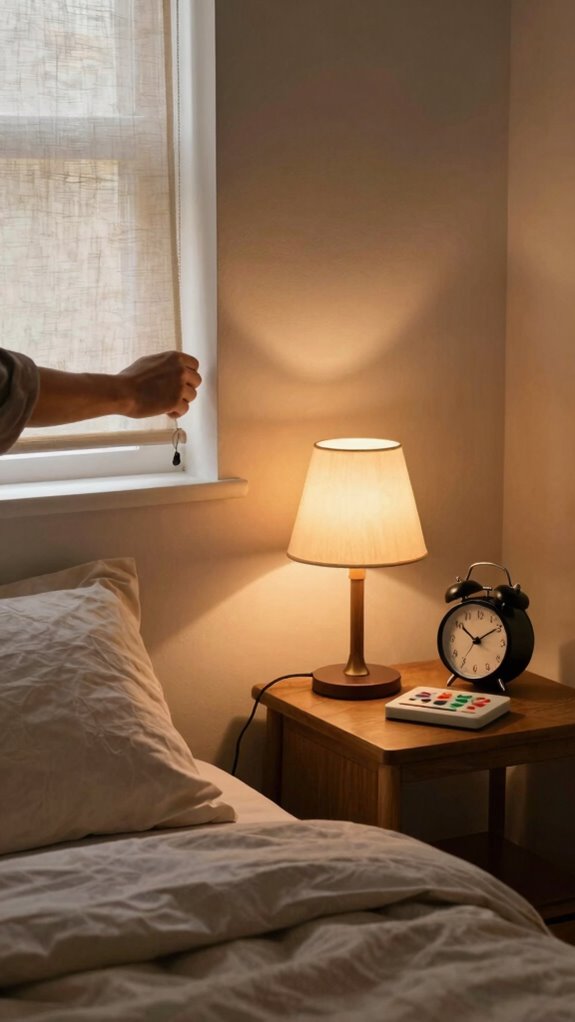
Have you ever looked around your dad’s bedroom and wondered if it’s doing more harm than good when it comes to those late-night wanderings and groggy mornings? As a son with a corporate past and a passion for senior independence, I get it—old spaces can feel like relics, but they don’t have to.
First, choose a calming bedroom color: soft neutrals or muted tones boost relaxation and reduce light toxicity. Arrange the bed in a sleep position that minimizes outdoor light exposure—facing away from windows works wonders.
Swap harsh bulbs for dim, amber or red-orange lights at night. Keep outdoor glare at bay with blackout shades or strategic furniture placement, and encourage your dad to maintain good sleep ergonomics. Incorporating electronic puzzle consoles can also provide gentle mental engagement that promotes restful reflection before sleep.
Let’s ditch outdated setups and build sleep sanctuaries that honor dignity and boost genuine well-being.
Designing Circadian Lighting Systems to Promote Rest and Longevity
Designing circadian lighting systems might sound like something straight out of a sci-fi movie, but in reality, it’s about giving your dad’s home a clever upgrade that champions his independence and natural rhythm.
Think of it as rewiring his world to reduce circadian misalignment—those sneaky little things that throw off his sleep cycle—and avoid melatonin suppression before bedtime. Instead of past boss-level, static lighting that makes him feel like he’s back in a dull office, you’ll install dynamic lights that mimic natural daylight, shift with the time of day, and support his circadian health.
Using overnight oxygen monitors can help track his sleep quality and ensure that his environment is conducive to restful sleep. No more stubborn “just turn off the lights!” moments. This isn’t just tech for tech’s sake; it’s about respecting his dignity, keeping his natural glow alive, and making his golden years truly shine.
Adjusting Sleep Environment
Revamping your dad’s sleep space to boost his independence isn’t just about tossing in a new lamp or furniture; it’s about crafting an environment that quietly works with his natural rhythms and keeps him safe without making him feel like he’s living in a hospital. Dimming controls are your secret weapon here—they let you adjust lights to just the right glow, preventing harsh flashes that could disrupt his melatonin.
Light diffusion is key — choose fixtures that scatter light evenly, reducing glare and creating a softer ambiance. Keep in mind, it’s not about locking down his space but empowering his autonomy with thoughtful tech. Incorporating light diffusion techniques can further minimize glare and enhance comfort during nighttime awakenings.
Lighting System Malfunction Alert
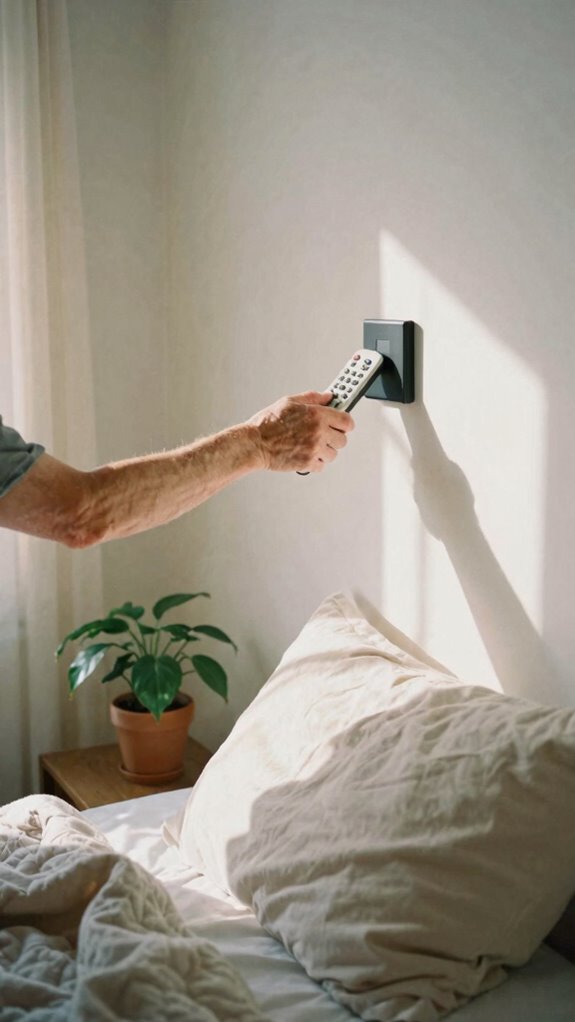
When your dad’s smart lighting system glitches—think flickering bulbs or dimmers stuck on high like that one infuriating office fluorescent that drove me nuts under my old boss’s regime—you can’t afford reactive fixes that scream “traditional caregiving fail.” Smart alerts kick in instantly, pinging your phone with crystal-clear notifications: “Bathroom light out—check fuse?” or “Motion sensor offline in hallway.” You’ll get step-by-step troubleshooting right there, from power cycling the hub to swapping a cheap LED, all while preserving his autonomy—no more stumbling in the dark or calling handymen at midnight.
- Wireless interference zaps your ambient illumination? App flags router clashes, auto-switches channels—dignity intact, no blackout fumbling.
- Dim hallway sensor? Instant ping reveals dust or battery fail; you reset remotely, keeping his independence fierce.
- Flickering from power surges? Alerts log it, suggest stabilizers—master proactive senior empowerment, ditch old-boss chaos.
With increased focus on air quality improvements, integrating smart systems can further enhance the senior bedroom environment, promoting better health and sleep quality. Why settle for dark-age risks?
Smart Bulbs and Timers
Getting your dad’s home wired with smart bulbs and timers isn’t just about flipping a switch — it’s about turning everyday lighting into a clever, hands-off safety net. You set personalized light schedules that mimic natural dawn and dusk, promoting better sleep and mood enhancement.
No more fumbling in the dark or worrying about accidental falls. Recall those long, frustrating hours dealing with outdated office tech? Yeah, this is nothing like that.
With smart lighting, you’re seamlessly blending tech mastery with dignity, empowering him to maintain independence. Envision waking up to a gentle glow that kicks in automatically, or evening lights dimming softly, just like a pro.
Why settle for dull, static lighting when you can craft a dynamic sleep-friendly environment? This is how you upgrade senior safety with style, simplicity, and a sprinkle of high-tech savvy.
FAQ
How Can Seniors Safely Balance Light Exposure for Optimal Sleep Health?
You can safely balance light exposure by aligning it with your circadian rhythms, avoiding blue and bright lights at night, and getting ample outdoor natural light during the day to respect your light sensitivity and optimize sleep health.
Are There Specific Wavelengths of Light That Are Most Beneficial for Aging Eyes?
You should focus on blue-enriched and amber wavelengths for spectral optimization, as they support circadian regulation and eye health. These wavelengths enhance sleep-wake patterns while minimizing retinal stress, promoting durability and mastery in managing your light environment.
What Are the Long-Term Health Risks of Exposure to Blue Light at Night?
Exposing yourself to blue light at night can cause long-term health risks, including circadian disruption and impaired sleep quality, increasing your susceptibility to metabolic issues, mental health problems, and age-related conditions by interfering with melatonin production.
How Do Different Lighting Sources Compare in Affecting Senior Melatonin Levels?
You’ll notice that blue-enriched white light, with its exciting spectrum for circadian alertness, causes significant melatonin suppression compared to warm, amber hues. Mastery involves choosing lighting sources that support healthy melatonin levels, not sabotage them overnight.
Can Light Therapy Be Personalized Based on Individual Health Conditions?
You can personalize light therapy by developing custom light regimes informed by health condition insights, such as adjusting intensity, timing, and spectral composition, ensuring ideal sleep and circadian alignment tailored to each senior’s unique physiological and medical needs.
Summary
Visualize turning your dad’s home into a sleek, tech-savvy sanctuary where light keeps him safe—and his independence intact. No more flickering bulbs or blind spots, just smooth, circadian-friendly lighting that whispers, “you’re in control.” Ready to ditch outdated fixes and set the stage for restful, vibrant days? Trust me, just like your best boss once said—attention to detail isn’t just corporate jargon; it’s the key to revealing a brighter, healthier future for your dad.
References
- https://www.chestphysician.org/light-therapy-to-improve-sleep-in-older-patients-with-dementia/
- https://news.feinberg.northwestern.edu/2022/07/19/light-during-sleep-in-older-adults-linked-to-obesity-diabetes-high-blood-pressure/
- https://www.mcknights.com/news/light-exposure-during-sleep-linked-to-obesity-diabetes-high-blood-pressure-in-seniors/
- https://pmc.ncbi.nlm.nih.gov/articles/PMC3839957/
- https://pmc.ncbi.nlm.nih.gov/articles/PMC7768397/
- https://cet.org/afternoon-light-the-key-for-more-restful-sleep-in-older-adults/
- https://www.sleep.ai/blog/tips-for-managing-light-exposure/
- https://www.withpower.com/trial/phase-alzheimer-disease-1-2023-2ca5c