Silent Guardianship: How I’m Protecting Dad Without Stealing His Freedom
I ditched my cubicle job when Dad’s balance started failing.
Writing here at SilverSoma because my 73-year-old father—and my grandfather before him—deserved better than institutional surveillance. Radar sensors detect respiratory patterns through doorways. Thermal imaging catches bathroom incidents privately. AI gait analysis predicts falls before they happen. Circadian-adjusted lighting combats sundowning episodes. Haptic flooring provides subtle stability cues. Zero cameras. Zero dignity loss.
Last Tuesday, Dad almost fell reaching for his coffee mug. The haptic floor activated. He steadied himself, completely unaware. That invisible safety net? That’s genuine autonomy with dignity intact.
Quick Takeaways
- Radar sensors in walls monitor breathing and movement without cameras, preserving privacy and enabling discreet health tracking.
- AI analyzes gait and motion patterns in real time to detect anomalies and predict potential health issues before they escalate.
- Thermal and floor pressure sensors identify falls or bathroom emergencies silently, using heat and pressure without visual surveillance.
- Smart home systems integrate sensors and circadian lighting to support independence while preventing disorientation and falls.
- Centralized automation via a smart hub enables proactive care through haptic alerts, environmental adjustments, and 24/7 invisible monitoring.
How Radar Sensors Monitor Seniors Without Wearables
What if you could keep your grandparents safe without turning their home into a surveillance lab or slapping another embarrassing wearable on their wrist? You’re not some corporate drone anymore—no more soul-crushing spreadsheets or micromanaging bosses. Now, you’re building something that actually matters: *invisible architecture* that loves them quietly.
Stealth sensors, tucked into walls like secrets, use radar to catch breath, heartbeat, movement—no wires, no beeping junk. It’s not sci-fi; it’s sanity. You’re not watching them. You’re *witnessing* their dignity.
These contact-free monitors run silent, 24/7, because real care shouldn’t feel like monitoring—it should feel like breathing. Recall how broken the old systems were? This isn’t another gadget collecting dust. It’s the quiet revolution they deserve.
You’re not preventing disasters—you’re preserving autonomy, one silent second at a time.
How AI Predicts Falls From Gait and Movement Patterns
You’re not just watching steps—you’re reading them. AI learns your rhythm, spotting tiny hiccups in stride that scream *trouble ahead*. Yeah, even if you’ve got genetic predispositions stacking the deck, this tech adjusts in real time. No more waiting for disaster like my old boss waited for Q4 reports—total dumpster fire energy.
Now, smart floors and LiDAR track your gait daily, no cameras, no creepiness. The system flags wobbles, short steps, delayed weight shifts—stuff humans miss. Then it nudges you: hydration alert, lighting tweak, maybe a stretch reminder. These lifestyle modifications? Game-changers. Silent upgrades to your body’s firmware. Sensor technology enhances the system’s accuracy, offering more reliable early detection of movement irregularities.
And you keep winning at dignity. No alarms blaring. No shame. Just quiet, total autonomy—like finally ditching fluorescent office lights for something warm, human, *alive*.
How Thermal Sensors Detect Bathroom Emergencies Safely
Silence isn’t empty—it’s knowledge.
When you’re not watching, that’s when care really counts. I swapped out clunky cameras for thermal sensors in Grandpa’s bathroom because dignity shouldn’t come with cables—or privacy concerns. These little heroes *feel* heat, not images, so nobody sees anything they shouldn’t. Just pure, passive safety.
Proper sensor calibration? Non-negotiable. Like fixing a glitchy boss dashboard, it prevents false alarms and keeps trust alive.
Here’s how it quietly saves lives:
- Detects motionless heat patterns—could mean a fall.
- Triggers alerts only when something’s *actually* off.
- Works in total darkness, no invasion, just awareness.
- Smart smoke alarms are also essential for comprehensive safety at home.
It’s not surveillance. It’s love, coded into warmth. And yeah, it’s way cooler than my old corporate KPIs ever were.
How Circadian Lighting Prevents Sundowning in Seniors
It’s not magic—it’s design. Think of it as emotional Wi-Fi: invisible, always on, *always supporting*. Why patch symptoms when you can rewire the environment? Using circadian lighting also helps reinforce the body’s natural circadian rhythm. Additionally, well-designed lighting can minimize the confusing and often disorienting sundowning symptoms in seniors. Grandma sleeps deeper, wakes sharper, and keeps her groove intact. Dignity isn’t loud. Autonomy isn’t fragile. And you? You’re not babysitting—you’re *architecting peace*. Now *that’s* innovation that matters.
Why Remote Monitoring Preserves Dignity and Autonomy
Instead, it just *knows*—quietly, respectfully. No cameras. No shame. Just peace.
Here’s what changes everything:
- Motion patterns, not video
- Alerts only when something’s off
- Total invisibility to the person being protected
- Stylish under cabinet lighting that blends seamlessly into home decor
In addition, these systems often utilize non-slip bathtub coatings to enhance safety in other vulnerable areas of the home, creating a comprehensive environment of protection. You’re not a security guard. You’re family. And with the right tech, you can protect without intruding—finally giving them freedom *and* keeping them safe.
Now that’s autonomy worth fighting for.
How to Build a Smart Aging-in-Place Home With Amazon Tech
Look, I know you’re not some IT manager stuck behind a desk anymore, pushing spreadsheets for a boss who thought “cloud” meant weather—but building a smart aging-in-place home?
You’ve got this. Start with Amazon.
Drop in circadian LED panels that sync to natural light—huge for Personalized wellness.
Pair ’em with medical-grade air purifiers. That’s Environmental integrations done right.
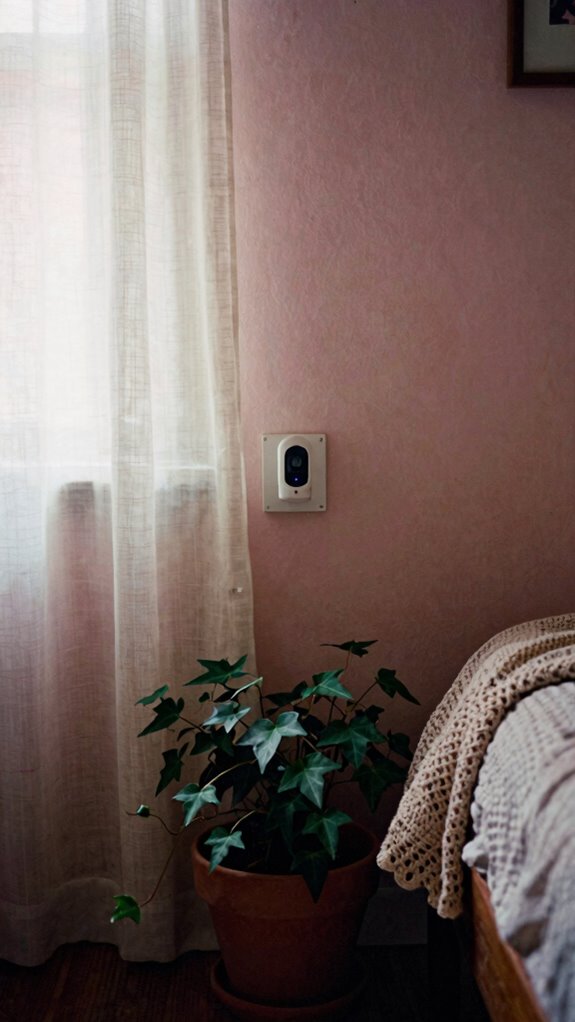
Toss in a radar health sensor behind the nightstand.
It reads breathing and heart rate through the wall—no wearables, no stigma.
Link everything to a smart hub so lights, air, and safety systems talk to each other like old friends.
Ambient AI’s proactive context awareness allows the system to anticipate needs before they become urgent, creating a truly seamless environment.
Want real dignity? Use voice-controlled thermostats and anti-inflammatory seating—zero-gravity chairs aren’t just for astronauts, man.
Skip the old “panic button” junk.
This isn’t about emergencies. It’s about thriving.
You’re not installing a hospital.
You’re crafting a home that *gets* them.
And honestly?
This beats another soul-crushing office gig any day.
You’re not fixing code.
You’re future-proofing love.
Missed Nightlight Motion
You spent years in that soulless office, answering to a boss who thought “innovation” meant switching printer brands—now you’re finally building something that matters. And when Grandpa nearly trips in the hallway at 2 a.m., you realize: nightlight automation isn’t a luxury—it’s dignity in action.
You spent years chasing trivial upgrades—now one near-fall in the night reveals the truth: automation isn’t smart unless it safeguards dignity.
But if motion sensor calibration is off, the lights stay dark when they’re needed most. Don’t let old logic fail him. Fix it with:
- Test the path at night—walk it like he does, slow and careful.
- Adjust sensitivity so it catches subtle steps, not just sprints.
- Sync lights with circadian rhythm—soft amber, never blinding white.
- If uneven lighting persists, consider non-slip coatings for bathtubs to ensure safety during night visits. Additionally, ensuring the sensor’s placement accounts for accurate motion detection can drastically improve response times and reliability.
Missed motion isn’t just a glitch—it’s a betrayal of trust. This isn’t about gadgets; it’s about letting him move freely, safely, *invisibly*. No cameras. No nagging. Just light, perfectly timed.
You’re not just upgrading lights—you’re defending his autonomy, one calibrated sensor at a time.
Add Haptic Floor Sensors
Spoiler: it can.
You install haptic floor sensors like you’re upgrading flooring, not launching a mission control. These suckers read floor pressure 24/7—silent, invisible, *clueing* you in before disaster strikes. No more “uh-oh” moments at 2 a.m.
Haptic feedback gently alerts *you* when his gait shifts—subtle, like a whisper from the house itself. No more nagging. No more beige panic buttons. Just the home doing its job: protecting dignity, not just data.
I traded Excel hell for this—because real innovation isn’t in boardrooms, it’s underfoot. These sensors utilize floor pressure sensing technology to provide continuous, unobtrusive monitoring, offering a proactive approach to safety.
By integrating clear stair grip strips, you can enhance added safety on tricky or slippery stairs, complementing the sensor system.
You’re not preventing falls. You’re preserving autonomy. One step, one pressure point, one *win* at a time.
And yeah, finally—tech that feels human.
Radar Vital Sign Monitoring
- Mount sensors away from metal to avoid signal interference
- Run sensor calibration weekly—like clockwork
- Keep firmware updated; think of it as digital insulin for your smart home
- Choose sensors with high sensitivity, to ensure accurate detection and reliable monitoring.
FAQ
Can These Systems Work During a Power Outage?
You lose power, but your system stays alive—battery backup kicks in seamlessly. No, it won’t fail you. Signal interference is minimal, so your peace of mind? Still intact. You’re protected, always. That quiet hum of safety? It never stops, even in the dark.
Do Insurance Plans Cover This Monitoring Technology?
You’re not covered yet—most plans don’t pay for tech like this, but you’re already seeing Insurance coverage expand as Monitoring benefits prove they keep you healthier and safely at home longer. You should ask your provider now; some cover sensors under home health benefits. You’ve got options, and we’re here to help.
How Is Collected Biometric Data Stored and Protected?
Your biometric data’s locked in a digital vault—fortress-grade data encryption keeps it safe, while strict access controls act like a moat and drawbridge, letting only trusted family or caregivers in, keeping prying eyes out.
Can Pets Trigger False Alerts in Motion Systems?
No, pets don’t trigger false alerts—you’ve got pet sensitivity built right in. The system learns their movements, ensuring false alarm prevention while keeping your loved one safe, giving you peace of mind without the worry.
Is Professional Installation Required for Radar Sensors?
No, you don’t need a pro—your radar sensor installs like a wise clock, quietly learning the rhythm of your walls. You handle sensor calibration in minutes, and installation procedures guide you gently, step by step, like a trusted hand on the railing of a familiar staircase.