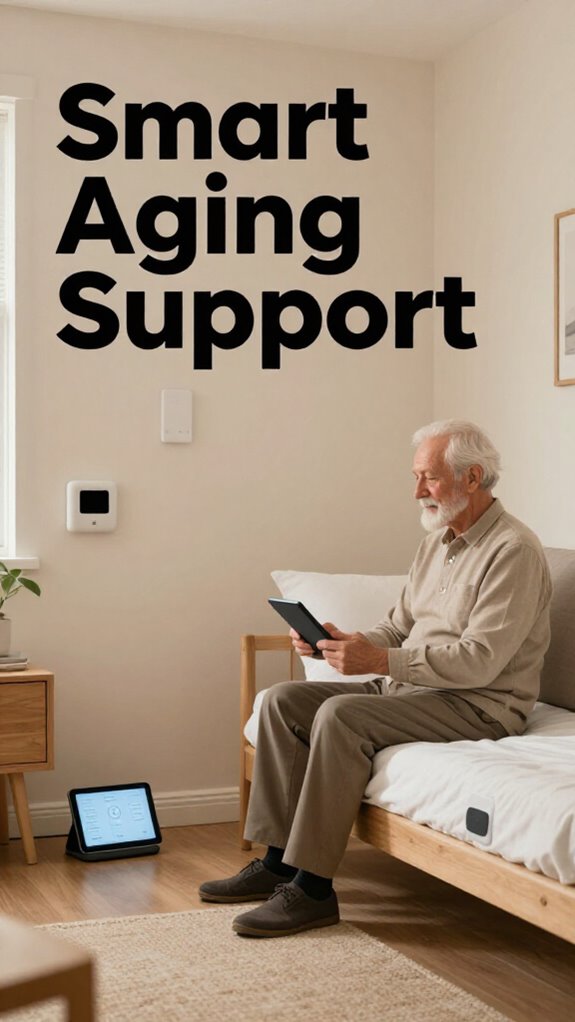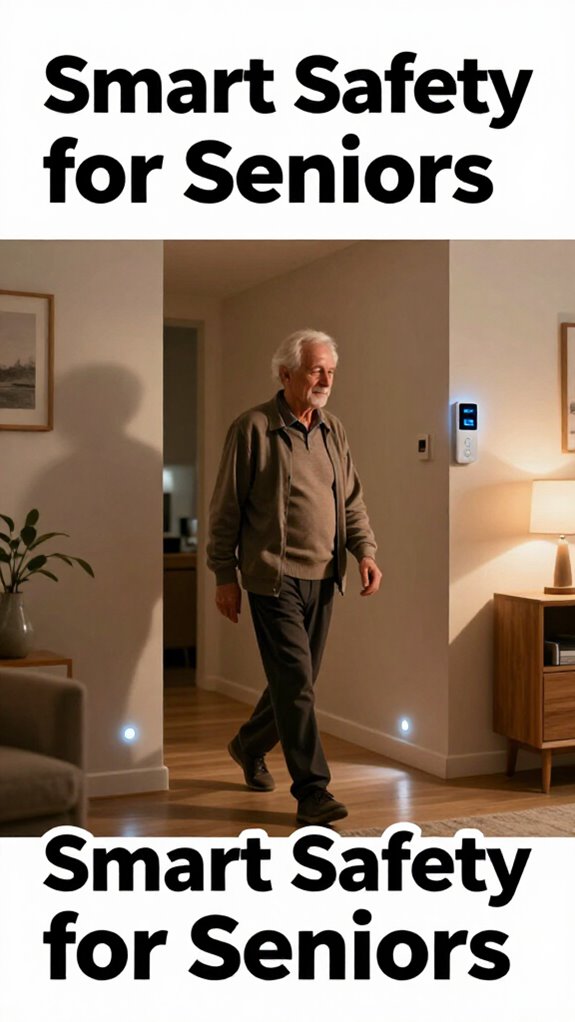
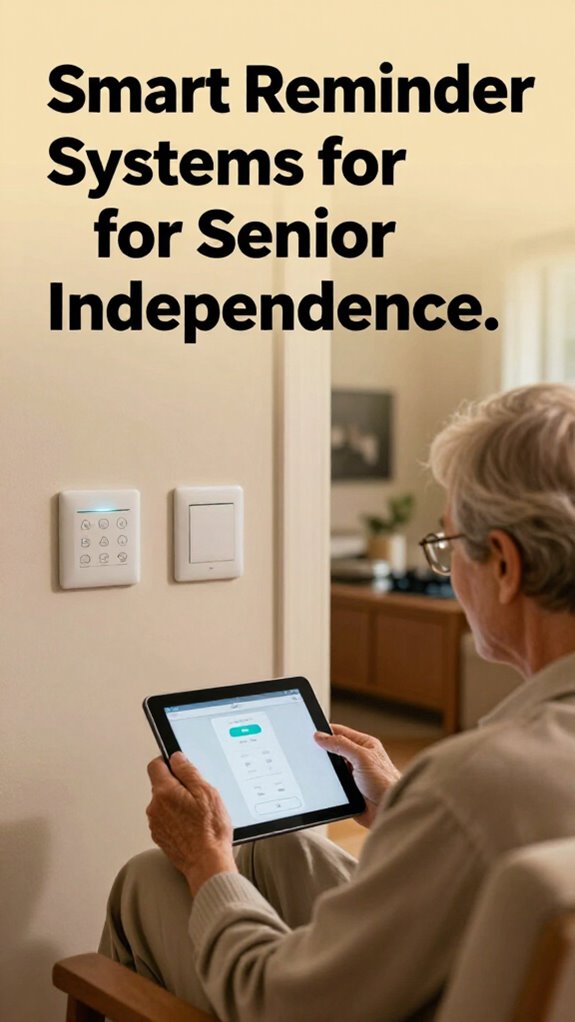
Keeping Dad Independent: My Journey with Smart Aging Tech
I discovered that helping my 79-year-old dad maintain autonomy doesn’t require surveillance. Instead, I’ve embraced discrete solutions—smart medication dispensers, voice-activated assistants, and ambient monitoring devices. These tools whisper reminders about prescriptions and meal times without feeling intrusive. Writing for SilverSoma helps me share what genuinely works for aging-in-place success.
Last March, Dad nearly missed his diabetic medication twice. I installed a Philips Lifeline with medication reminder integration at his suburban Ohio home. Within weeks, his compliance improved dramatically. That single moment—seeing his relief at remembering independently—solidified why personalized tech interventions matter for elder dignity.
Quick Takeaways
- Use intuitive, discreet smart devices like voice-activated reminders and pill dispensers to support medication management and daily routines.
- Organize environments with easy-access storage and visual cues to reduce frustration and enhance independence.
- Calibrate sensors and reminders regularly for accuracy, safety, and tailored assistance.
- Incorporate safety features such as smart stove shutoffs and motion-activated lighting to promote security.
- Integrate smart home systems that automate tasks and enable effortless management of daily activities via voice or app.
Why Memory Is Key to Senior Independence
Let’s face it—nobody wants their dad feeling like he’s lost in a maze of confusing alarms and outdated alerts. That’s exactly why boosting cognitive resilience matters. You want your dad to stay sharp, engaged, and independent, right? A well-organized pull-out pantry shelves can also reduce frustration and save time in daily routines, contributing to a calmer, more manageable environment. Brain training isn’t just for kids; it’s a vital part of modern senior care. Simple activities like puzzles or memory games on a tablet can help, but link those to smarter routines—like personalized reminders and social engagement—to keep his mind agile. Think of it as upgrading his mental software, like tuning a high-performance machine.
Regular mental exercises help build cognitive resilience, which is essential for maintaining independence as we age. When you focus on strengthening his brain, you’re also reinforcing his confidence, dignity, and autonomy. No more babying, just empowering him with tools that support mental resilience and help him thrive at home.
How Reminder Technologies Help Seniors Remember Daily Tasks
Recall those days in the office, fumbling with sticky notes or trying to juggle countless email reminders?
Remember those days of juggling reminders, now replaced by smart, respectful tech that keeps him independent.
Now, envision your dad’s home, equipped with smart reminder tech that actually *works*. These systems don’t just ping him; they tap into memory techniques and cognitive exercises that keep his mind sharp—think gentle nudges for medication, appointments, or even simple tasks like locking the door.
Instead of treating him like a patient, you’re empowering his independence, helping him maintain dignity. Modern voice assistants or visual alerts can prompt him in real-time—no fuss, no frustration.
Incorporating sound quality improvements into senior conversation systems can also make communication clearer, reducing misunderstandings and fostering better social interactions.
It’s about blending tech with respect, so he’s in control, not overwhelmed. Why settle for old-school reminders when today’s solutions make aging at home feel seamless, safe, and fiercely autonomous?
How to Pick the Right Reminder System for Your Senior
Ever wondered why choosing the right reminder system for your senior feels more like decoding a tech puzzle than straightforward caregiving? It’s all about blending memory tactics and cognitive exercises into a seamless experience.
If your dad’s used to running board meetings, he deserves tech that respects his independence—no clunky alarms or slow interfaces. Look for systems that subtly reinforce routines, like smart wall displays or voice-activated reminders, that tap into his existing skills. Make it intuitive, so he feels in control.
Skip the “set-and-forget” fallacy; empower him to stay sharp, using memory aids that challenge his brain gently and keep him engaged. Recall, his dignity isn’t a feature—it’s the foundation of a truly modern approach to senior independence. For optimal audio clarity, consider systems that enhance television audio quality for clearer listening, making it easier for him to stay connected and engaged with his favorite shows. Integrating ambient AI can provide more natural and context-aware assistance, further supporting his independence without feeling intrusive.
How to Set Up and Personalize Reminder Devices at Home
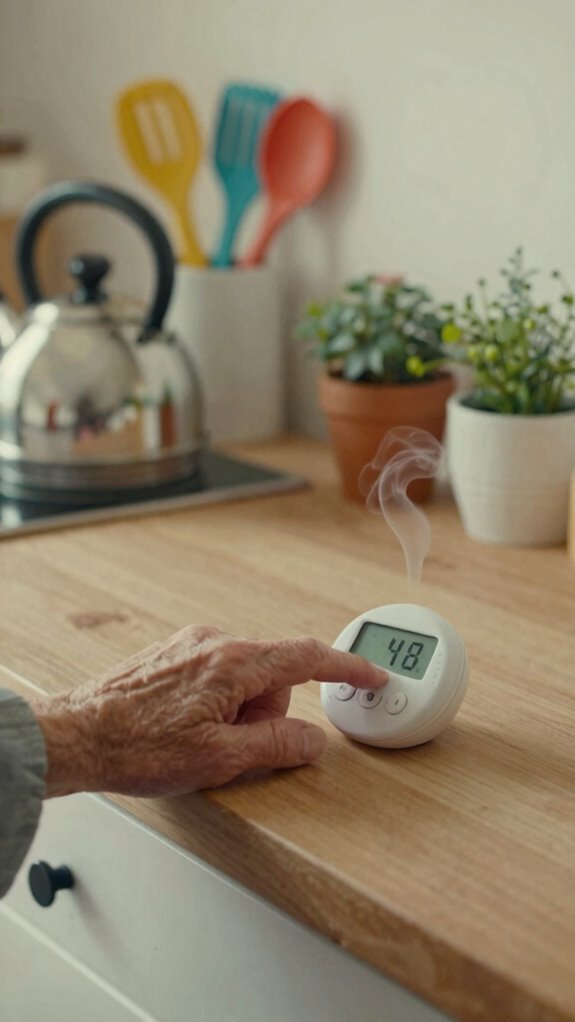
Getting your dad’s new reminder setup just right can feel like managing a corporate project without a Gantt chart—overwhelming and full of unknowns. But with a little finesse, you turn it into a seamless process rooted in mastery.
Start with sensor calibration—make sure all sensors, like voice recognition systems, are finely tuned to your dad’s voice and environment. This means running calibration routines so the device recognizes commands accurately, avoiding those frustrating “Who said that?” moments.
Begin with sensor calibration to ensure voice commands are accurately recognized, avoiding frustrating misunderstandings.
Voice recognition now adapts to his speech, ensuring effortless interaction that preserves dignity. Think of it as upgrading from a clunky boss to a smooth operator. Focusing on sensor accuracy can significantly improve overall device performance and reliability.
This personalization creates an intuitive system, letting your dad feel independent and supported—no tech frustration, just smarter, safer living. Additionally, incorporating smart stove shutoff devices can enhance safety by automatically turning off appliances if left unattended, reducing fire risks and giving added peace of mind.
How to Monitor and Fine-Tune Reminder Systems Over Time
Monitoring and fine-tuning your dad’s reminder systems over time might feel a bit like managing a fast-paced project—except this one’s about keeping him safe and thriving, not hitting quarterly targets. You’re battling neural decay, which erodes cognitive routines little by little, so consistency plus smart tweaks are key.
Check if he’s still responding to your cues, or if his routines have shifted—like losing track of time or forgetting meds. Modern tech makes this easier: use AI-driven alerts that adapt, or sensors that notice gait or engagement changes. For example, top floor pressure sensors can help detect when he gets up or falls, providing additional safety insights.
Instead of setting it and forgetting it, stay active with regular reviews—like those long office meetings you hated. Ask yourself: “Is this system working without stepping on his dignity?” Regularly reviewing cognitive cues can help you understand whether the reminders are still appropriate or need adjustments.
Fine-tuning becomes a dance, ensuring safety without micromanagement or burnout.
Troubleshooting Tips and Customizing Reminders for Better Results
When it comes to tweaking those high-tech reminder systems for your dad, it’s not just a set-it-and-forget-it deal—trust me, I’ve been there, and it’s like managing a tricky project from back in the corporate days, minus the cubicles and coffee runs. The secret? Customizing with targeted memory cues and cognitive triggers.
Use clear, consistent signals—like a bright LED or a gentle sound—to prompt specific actions. If reminders aren’t sticking, tweak the timing or adjust the cues to align with his routines.
Consistent signals like bright LEDs or gentle sounds help reminders stick—adjust cues to fit his routines and reinforce independence.
Ever forget how old habits die hard? Well, that’s why these tweaks matter. Think of it as fine-tuning an inbox filter or a marketing drip campaign—only this time, it’s his independence on the line. Incorporating top cooling mattress toppers can also contribute to better overall comfort, which supports sustained attentiveness and reduces distractions that might interfere with reminder effectiveness. Improved sensory cues can enhance the clarity and impact of reminders, making it easier for him to respond promptly. Dignity, autonomy, and a little tech-savviness—simple, right?
Smart Memory Aid Devices
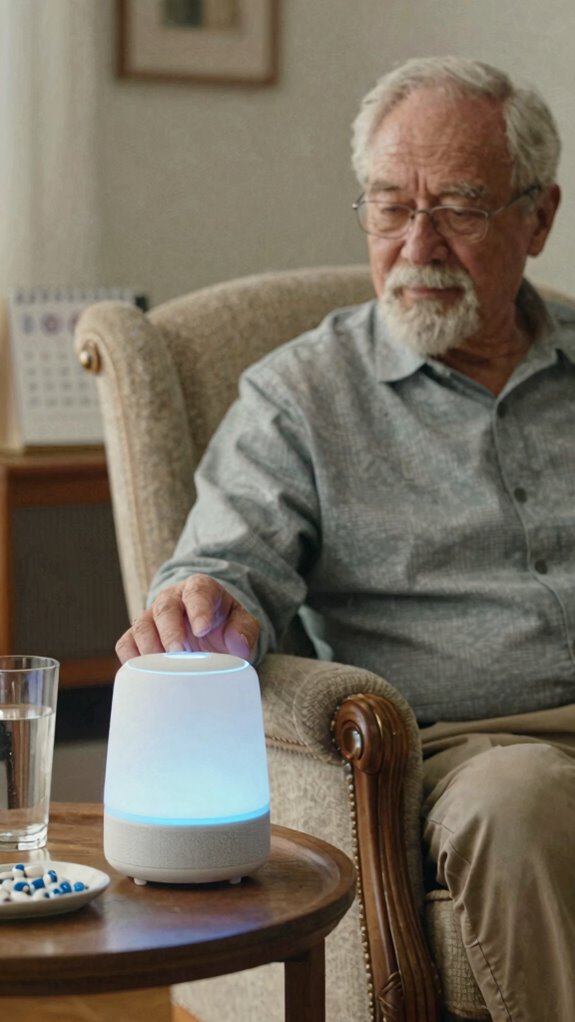
You know those days back in your corporate grind when a simple task turned into a full-blown project—metrics, checklists, endless meetings? Now, envision applying that same mastery to supporting your dad’s independence.
Smart memory aid devices are game-changers. They’re all about memory cues that seamlessly blend into his daily routines, offering cognitive support without the stigma of “help.” Think voice-activated reminder apps that nudge him when it’s time for meds or appointments, or intuitive alerts for meals, hydration, and even taking short walks.
No more nagging or fuss—just elegant tech that respects his dignity. These devices help him stay autonomous while giving you peace of mind.
After all, isn’t that what we’re really after: empowering our loved ones and reclaiming a bit of that old corporate confidence?
Smart Pill Dispensers Automated Reminders
Ever wish there was a way to keep your dad on top of his meds without turning his home into a high-security prison? Enter smart pill dispensers with automated reminders — the game-changer for managing medication timing and boosting daily routines.
These sleek devices sync with his schedule, popping up friendly alerts when it’s time to take pills, just like a confident assistant. No more frantic searches, missed doses, or bossy alarms — it’s all about preserving dignity and independence, even if his past office habits tried to turn him into a control freak. Incorporating emergency strobe lights can also enhance safety by increasing visibility during nighttime routines or outdoor activities.
Plus, they often feature motion-activated baseboard lights, which can help ensure safe navigation during nighttime routine checks or bathroom visits. They’re simple to set up, discreet, and stay out of sight, like all the best modern tech should be. Give your dad a tool that keeps him autonomous, and you get peace of mind that’s truly worth the upgrade.
Smart Home Integration Advances
Have you ever looked at a home security system and thought, “What if this could do more than just keep out intruders?” Well, that’s exactly where modern smart home integration advances step in, transforming your dad’s house into a fortress of independence without making it feel like he’s living in a sci-fi set.
With voice commands and app notifications, he can control everything effortlessly—lights, door locks, even emergency alerts—without moving a muscle. No more shouting across the house or digging through menus; this tech respects his dignity and autonomy.
Envision a subtle nudge via a quick alert when he leaves the stove on or a reminder to take his meds. It’s seamless, supportive, and tailored to his real needs—brilliant for giving him the freedom he deserves. Additionally, magnifying senior remote control buttons can make adjusting devices even simpler, ensuring technology remains accessible and user-friendly.
Furthermore, ultra-wideband UWB proximity technology enables centimeter-level location tracking, which facilitates ‘Follow-Me’ automation—allowing smart devices to adapt seamlessly as he moves around the home, enhancing safety and convenience.
FAQ
Are There Reminder Systems Compatible With Ambient Biometrics and Predictive Guardrails?
You can integrate reminder systems with ambient biometrics and predictive analytics, leveraging smart home platforms that sync with ambient sensors and AI-powered guardrails. This mastery of ambient integration guarantees timely, proactive alerts for senior independence and safety.
How Secure Are Personal Data When Using Digital Reminder Devices?
Your data privacy depends on the device’s security protocols, which should include end-to-end encryption and regular updates. Mastering these safeguards guarantees your personal information remains secure against unauthorized access in digital reminder devices.
Can Reminders Be Customized for Different Cognitive Levels or Sensory Impairments?
You harness personalization options and sensory adjustments like a skilled conductor, fine-tuning reminders to match cognitive levels and sensory needs, creating a symphony of tailored cues that empower mastery and effortless engagement in daily independence.
Do Reminder Systems Require Professional Installation or Can They Be Self-Set Up?
You can self-set up digital reminder systems, saving costs compared to traditional professional installation. Digital options offer intuitive interfaces, making mastery achievable, while traditional systems often require professional help, increasing expenses and installation complexity.
How Long Do Battery or Power Supplies Typically Last in These Advanced Reminder Devices?
Battery longevity varies, typically lasting 6-12 months depending on device usage and type, while power supply lifespan usually exceeds five years with proper maintenance, ensuring reliable operation of advanced reminder devices for sustained senior independence mastery.
Summary
Visualize your dad’s place, a calm oasis where tech and dignity dance side by side—no more frantic searches or missed meds, just smooth sailing. While you’ve wrestled with rigid office clock-ins and boss deadlines, today’s reminder systems offer a liberating balance of safety and independence. It’s like flipping the switch from reactive chaos to proactive peace, letting your dad live fully while you chill knowing he’s got smart support—no micromanagement required.