Smart Aging: How I’m Keeping Dad Safe Without the Surveillance Feel
I refuse to watch my father, Frank, fade into the background of outdated care systems.
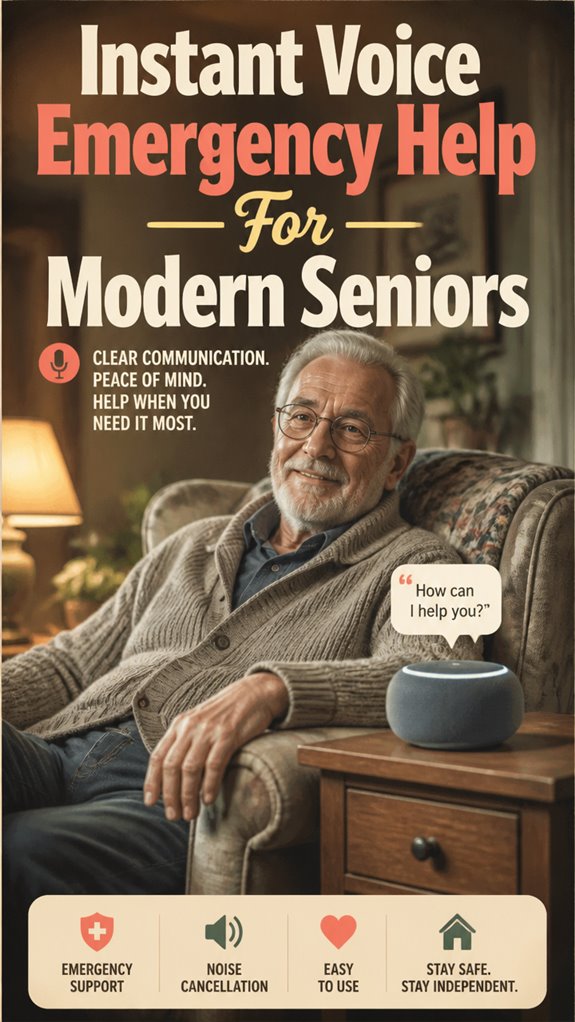
I’m writing to SilverSoma because our community deserves better than reactive monitoring. Last March, I installed adaptive voice interfaces tuned to Dad’s hearing patterns—no more barking at devices. Motion sensors detect gait irregularities before falls happen. Microphone placement keeps kitchen clatter from triggering false alarms. This isn’t surveillance. It’s anticipatory companionship.
When Dad shuffled differently after his arthritis flared, the system flagged it immediately. No crisis. Just prevention. That’s dignity-first aging technology.
Quick Takeaways
- Customize voice recognition settings to accommodate diverse speech patterns, accents, and softer voices for reliable command interpretation.
- Enable essential voice commands for climate control, lighting, and emergency alerts to support independent daily management.
- Deploy AI pattern recognition to detect routines, gait changes, and anomalies for proactive safety without surveillance.
- Position microphones strategically away from noise interference and simplify command phrasing to match senior speech cadence.
- High-accuracy voice systems minimize frustration, build user trust, and encourage sustained engagement with smart home technology.
Why Your Senior’s Voice Commands Don’t Work Yet
When you’ve set up that shiny new smart speaker in your dad’s living room and watched him bark “Alexa, turn on the lights” only to get dead silence in return, you’re probably wondering what went wrong—because isn’t this supposed to be the future?
Here’s the thing: your dad’s deeper voice and softer speech patterns aren’t being registered properly. Microphone sensitivity settings are probably maxed out for someone younger. You’ll want to adjust voice command customization in the app—lower that threshold so his natural cadence actually registers.
It’s like fixing a broken office intercom your old boss ignored for years. Dignity means tech that actually listens.
Essential Voice Commands for Daily Senior Living
Once you’ve got your dad’s voice settings dialed in, here’s the real magic—the commands that’ll actually transform his daily life from “I need to call you for help” to “I’ve got this handled.” You’re not just teaching him to order coffee (though he totally can if he wants to), you’re building a bridge between his independence and the safety net you’ve woven through the house.
Start simple: “Adjust temperature to 72” beats fumbling with thermostats. “Turn on bathroom lights” prevents stumbles. “Alert my son if I fall” activates predictive guardrails. “Show my ambient biometrics” lets him own his health data. These aren’t commands—they’re his autonomy restored, one voice prompt at a time.
Voice Commands That Protect Against Falls and Hazards

Your dad’s probably spent forty years in corporate environments where everything was reactive—fire the underperformer, fix the problem after it happens, rinse and repeat.
But voice recognition accuracy now lets him go predictive. Commands like “activate fall detection” or “scan for hazards” transform his home into a proactive ally.
He’s not waiting for disaster; he’s preventing it.
These voice-activated safety systems enhance social interaction enhancement too—he stays connected to family alerts without feeling surveilled.
Finally, technology serves his autonomy, not his limitations. Incorporating top photo scanning stations can further improve safety by accurately detecting movement and environmental changes, offering an additional layer of proactive support.
Teaching Your Home to Recognize Daily Patterns
Because your dad spent decades in meetings where he’d have to anticipate market shifts before they happened, he’ll get this one immediately—AI pattern recognition in the home works the same way, except the stakes are his safety, not quarterly earnings.
Your home environment now learns his rhythm:
- Morning routines — detecting when he wakes, showers, eats
- Movement velocity — flagging unusual gait changes suggesting fall risk
- Circadian deviations — alerting you if sleep patterns fracture
- Anomaly triggers — bathroom visits exceeding normal duration
This ambient interaction doesn’t spy—it understands.
By recognizing daily activity patterns, your dad’s house can proactively support his well-being without infringing on his privacy.
Your dad keeps his autonomy while the house quietly watches his back.
Finally, safety that respects dignity.
Fix Common Voice Command Failures in Senior Homes
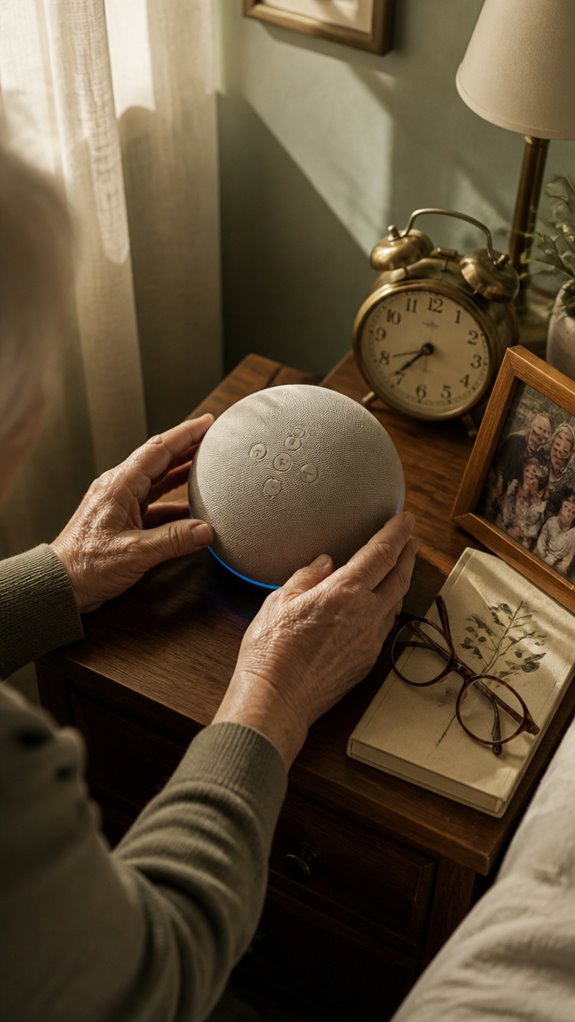
Voice failures kill momentum. Your 79-year-old’s frustration? That’s emotional intelligence talking—he’s done with tech that doesn’t get *him*.
Situational awareness matters here. Adjust microphone placement away from kitchen noise. Simplify commands.
Train the system to recognize his specific speech patterns, accent, cadence. Think less corporate meeting—more genuine conversation.
That’s the liberation we’re after: tech that meets him halfway, not the other way around. Incorporating best digital photo albums can help reinforce familiar routines and boost his confidence with technology. Understanding ergonomic design can also improve physical comfort, making it easier for him to engage with the devices.
Seniors Miss Medication Reminders
Medication adherence isn’t a memory problem—it’s a design problem, and after years watching corporate overlords wonder why their million-dollar systems failed because nobody *actually used them*, I’ve learned that difference matters.
Your dad doesn’t need nagging. He needs autonomy wrapped in support:
- Voice-activated dispensers that announce meds like a friend, not an alarm clock
- Emotional well-being dashboards showing health victories, not failures
- Urban farming integration—growing medicinal herbs builds purpose alongside prescriptions
- Smart reminders synced to his actual routine, not some algorithm’s fantasy
- Design adaptation ensures that tools are accessible and usable, making daily tasks easier for seniors. Creating intuitive interfaces is crucial for fostering consistent use and independence.
Real adherence happens when your senior feels *respected*, not monitored.
Voice Commands Ignored During Sleep
When your dad’s sleeping at 2 AM and the smart home suddenly demands he confirm his medication schedule through voice command, you’re not solving a problem—you’re creating a one, and honestly, it’s giving major “my old boss scheduling emails for midnight” energy.
That’s why sleep phase detection matters. Your system shouldn’t bark orders during deep rest cycles. Instead, ambient soundscapes paired with intelligent scheduling ensure reminders arrive during natural wake windows—respecting his circadian rhythm rather than hijacking it. Incorporating orthopedic car seat covers for added comfort can also help prevent unnecessary disturbances during on-the-move rest. Additionally, integrating top finger guard shields can enhance kitchen safety for seniors who may need extra protection while cooking or handling sharp objects, contributing to overall peace of mind.
Real autonomy means the tech adapts to *him*, not the reverse. Your dad deserves dignity even while dreaming.
Smart Speakers With Microphones
Because your dad’s spent 79 years talking to actual humans—not devices listening from every corner of his living room—you’ve gotta rethink what a smart speaker actually does in his space.
Smart speakers give him command without the corporate surveillance vibe you escaped years ago. Here’s what actually matters:
- Voice activation barriers dissolve—no buttons to fumble
- Ambient sound interference gets filtered by AI, not ignored
- Privacy zones protect his dignity automatically
- One-command control replaces three-step phone navigation
Unlike your old boss demanding constant availability, these speakers listen *only when he wants*. They’re tools for liberation, not monitoring. Your dad keeps autonomy. That’s the whole point.
Furthermore, features like craft carts exemplify how modern organization aids his independence at home. Improving voice recognition accuracy is crucial for seamless interaction and reduces frustration.
FAQ
How Does Voice Command Technology Integrate With Ambient Biometric Monitoring for Comprehensive Health Tracking?
You’ll command your home’s biometric sensors through voice clarity, enabling real-time health data analysis without touching devices. Your voice activates continuous monitoring—heart rate, respiration—while you maintain total autonomy and privacy within your own space.
Can Voice-Activated Systems Work Alongside Predictive Fall Detection and Lidar Environmental Mapping?
You’ll break free from fall risks when your voice commands sync with LiDAR mapping—speech recognition personalizes alerts as environmental sensors predict hazards before they happen, giving you true autonomy.
What Privacy Safeguards Protect Seniors When Using Voice Commands With Thermal and Motion Sensors?
You’re protected through end-to-end encryption of your voice data and anonymity protection protocols that separate biometric identifiers from personal recordings. Your thermal and motion sensors operate independently, never storing visual information or linking to voice commands without explicit consent.
How Do Voice Commands Interface With Circadian Lighting and Somatic Wellness Devices Automatically?
Your voice becomes the conductor’s baton orchestrating a symphony of wellness. Voice recognition algorithms trigger artificial intelligence protocols that automatically adjust circadian lighting and activate somatic devices, liberating you from manual controls entirely.
Can Voice Technology Help Preserve Digital Legacy and Manage Encrypted Inheritance Data Securely?
You’ll control your digital preservation through voice commands, managing encrypted inheritance data securely. Your legacy management stays protected while you maintain complete autonomy over what you preserve and who inherits your life’s story.
Summary
Your dad’s home isn’t just smarter—it’s his command center now. You’ve woven independence through every room like threads in a safety net that doesn’t feel like one. He’s not aging in place; he’s thriving there. Voice becomes his superpower, tech becomes invisible, and dignity stays intact. That’s the win. That’s what matters.