Keeping Dad Mobile: My Journey With Smart Home Safety
Dad turned 79 last March. I realized I couldn’t hover constantly. So I explored geofencing, motion sensors, and gait-analysis AI. I’m writing this for SilverSoma because dignified aging matters. Smart tech—not surveillance—lets him roam freely while I stay informed.
Last Tuesday, Dad almost tripped on the hallway runner at 2 AM. His sensor flagged unusual movement patterns before the fall happened. I checked in via video call. He was fine, grateful I noticed without being intrusive. That moment crystallized everything.
Quick Takeaways
- Implement discreet, AI-driven monitoring systems to detect falls and irregular activity without compromising privacy.
- Use warm, circadian lighting and non-slip aids to enhance safety and promote restful sleep.
- Utilize sensors and biometric analytics for early fall prediction and continuous health monitoring.
- Incorporate secure, easy-to-use access solutions like fingerprint locks to ensure safety and independence.
- Ensure backup power and automated lighting to maintain safety during outages and reduce nighttime hazards.
Why Night Safety Is Key to Senior Independence
Ever wonder why night safety is the unsung hero of keeping seniors truly independent? Think about it—just like managing those endless deadlines or keeping employees on track, your dad’s nighttime routine needs a smart, seamless approach.
Night safety is the key to seniors’ independence—seamless, smart, and stress-free.
With the latest tech, medication management becomes invisible, so he never worries about missed doses or accidental slips. And emotional well-being? That’s all about dignity and trust; no harsh alarms or invasive checks.
Modern homes now anticipate hazards before they happen—no more frantic middle-of-the-night rescues or feeling like you’re back in a high-stakes office where mistakes are unforgivable.
It’s about empowering his independence, whether he’s maneuvering a dark hallway or just craving a little peace of mind.
That’s true care—caring that feels natural, like part of a well-oiled, smart home.
How to Create a Safe and Comfortable Bedroom Environment
Transforming your dad’s bedroom into a safe, cozy sanctuary isn’t about just turning on the lights or tossing in a few old pillows. You want his sleep environment to feel like a haven—peaceful, safe, and tailored to his needs.
Focus on bedding comfort—think breathable sheets that won’t trap heat or cause discomfort during restless nights. With smart tech, you can add ambient biometrics to monitor his sleep quality without invading his privacy.
Consider a firm yet soft mattress customized to support his back and joints, avoiding that dreaded “hard-as-a-rock” feeling from his corporate days. Incorporating top stair grip strips can also help prevent falls when moving around his room, especially on any steps or uneven surfaces.
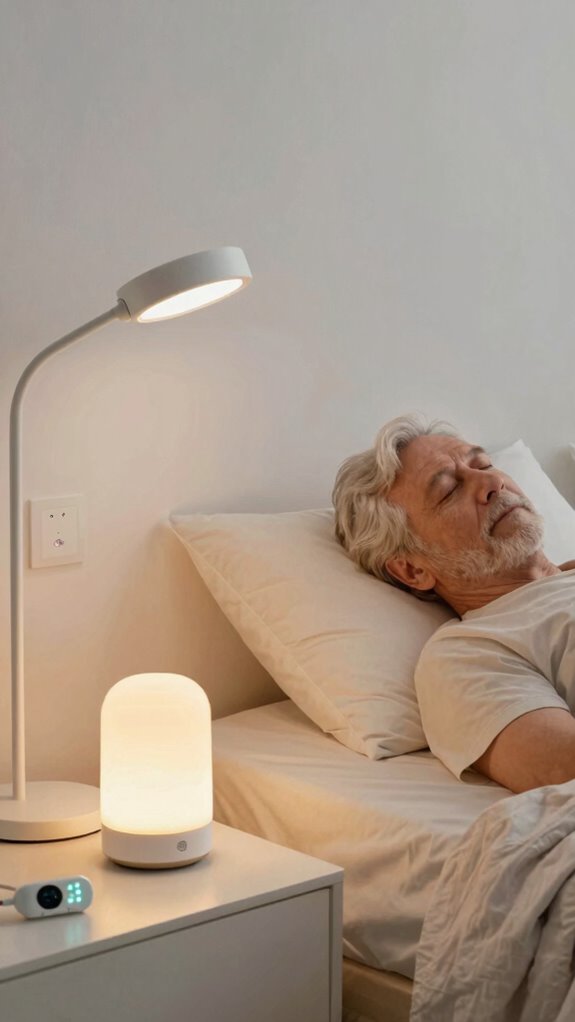
Dignity and autonomy are key—so ditch harsh overhead lights for warm, circadian-compatible lighting that helps him relax and stay safe.
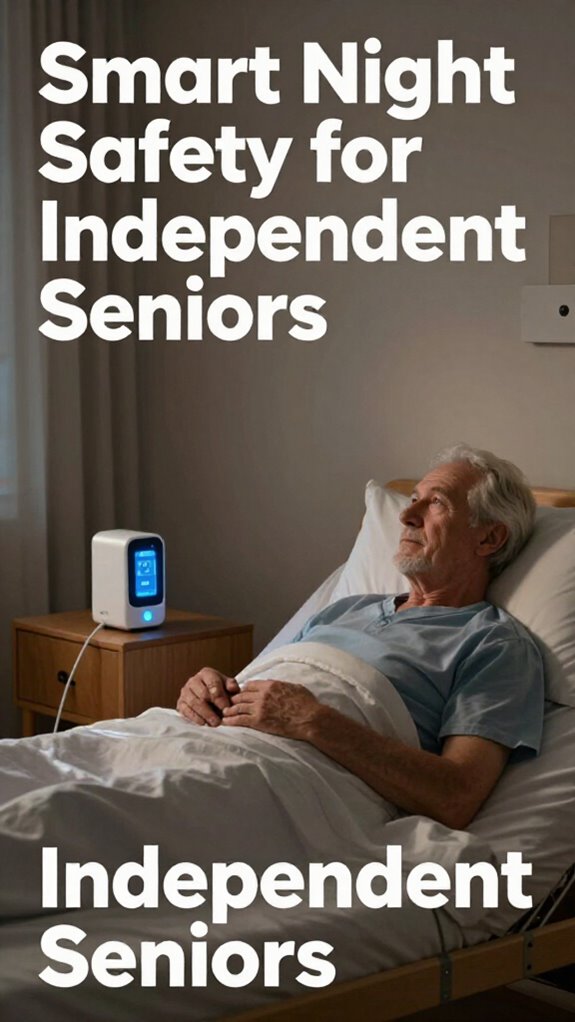
Additionally, integrating radar fall detection systems can provide an extra layer of safety, alerting caregivers immediately if a fall occurs while he’s resting.
Isn’t it time his room looked more of a sanctuary than a relic of office stress?
Invisible Safety Supports: Protecting Seniors Without Invading Privacy
You know how in the old days, it was all about invasive cameras, constant check-ins, and feeling like Big Brother was watching your every move? Well, I’ve been there—remember sorting through endless office surveillance, trying to hide what needed privacy?
Now, I get to do that differently for Dad’s home. Invisible UI and ambient monitoring mean I don’t need cameras glaring in every corner or alarms that scare him half to death. Instead, I install sleek sensors and smart systems that quietly track essential signs and movement—all out of sight.
How Smart Home Tech Prevents Nighttime Falls in Seniors
Thinking back to those endless spreadsheet meetings and boss-pleasing checklists, it’s wild how much the game has changed—especially when it comes to keeping Dad safe at night. Now, smart home tech is the hero, making falls less of a worry.
Smart home tech has transformed safety, making caregiving discreet, respectful, and effective—keeping loved ones safe without sacrificing dignity.
No more clunky wearables that felt like a badge of infirmity; instead, we’re using user customization to fit his unique habits perfectly. Wall-mounted sensors and invisible UI monitor his movements, catching strange gait changes or prolonged bathroom visits before he even slips. These advanced sensors leverage tactile bump dots to help visually impaired users navigate controls more confidently, which is especially helpful for those with sensory challenges.
It’s like having a discreet, tech-savvy assistant—minus the bossy attitude. These smart systems respect his dignity while seamlessly integrating into his home, giving him independence and peace of mind. With innovations like Fingerprint Door Locks, securing entrances becomes both easier and more reliable than traditional locks.
And honestly? It feels good knowing he’s safe without feeling monitored. Win-win.
Top Tips for Families to Ensure Peaceful, Safe Nights
Bringing peace of mind to nighttime safety doesn’t have to feel like maneuvering a maze of old-school alarms and clunky devices that scream, “Hey, I’m fragile now.” If you’re like me—someone who’s spent way too many hours in corporate meetings chasing deadlines—you know a proactive, tech-savvy approach makes all the difference.
Modern safeguards keep your dad’s independence intact while addressing issues like sleep deprivation, which can mess with elderly nutrition and overall well-being. Forget the clutter—integrate invisible UI systems, smart lighting, and ambient biometrics. Technology that enhances sound quality for senior group conversations can also improve social interactions, reducing feelings of isolation often experienced by seniors.
These tools quietly monitor his essential signs, prevent falls, and promote restful sleep, all while respecting his dignity. An added bonus: best daylight hobby lamps can also subtly improve his environment by providing natural-like light, which is crucial for mood and health in seniors. Do you really want to stick with outdated safety tricks? Or is it time to upgrade for peace, independence, and a good night’s sleep?
Choosing and Integrating Devices for Better Night Vigilance
Steering through the maze of night safety devices can feel just as intimidating as deciphering a cluttered inbox from your old corporate days—overwhelming, filled with buzzwords, and gadgets promising the world but often falling flat.
So, here’s the scoop: modern devices are your new best friends. Think noise-cancelling sleep aids—because who wants to wake up from the slightest rustle or outside noise?
Plus, sleep tracking tech discreetly monitors your dad’s rest patterns, alerting you to issues without cramping his style.
Choosing these devices isn’t about installing bulky stuff; it’s about seamless integration into your home’s architecture.
Innovative radar sensors can passively track breathing and heart rate to detect any irregularities, providing an extra layer of safety without intruding on his privacy. These sensors are often more reliable than traditional contact-based monitors and utilize top floor pressure sensors for enhanced accuracy and coverage, especially in larger or multi-room spaces.
Ditch the old fears of hovering—these tools support his dignity, independence, and quiet nights, giving you peace of mind without turning nights into tech nightmares.
Sensor Alerts During Power Outage
Ever tried managing a blackout in a busy office, where every second feels like a mini disaster, and you’re scrambling to find the emergency kit or fix the chaos? That chaos is exactly why I prioritized sensor alerts during power outages for Dad’s place.
Instead of panic, he’s got a smart system with a reliable battery backup that keeps vital alerts active. If he gets up during a blackout, an emergency alert fires off directly to my phone, no matter what’s happening around us.
No more guessing if he’s safe—just peace of mind knowing the tech’s got his back, even when power’s out. Reliable battery backup is crucial in ensuring continuous protection during unforeseen outages. This isn’t about taking away his independence; it’s about giving him safe space to thrive, with a little help from modern magic. Knowing that smart tech features can operate reliably during outages makes all the difference.
Smart Motion-Activated Night Lights
When it’s late at night, maneuvering your parent’s house shouldn’t feel like stepping through a maze of shadows. And honestly, who wants a bright light blasting them awake every time they move? That’s where smart motion-activated night lights come in—these little marvels turn bedside illumination into seamless, gentle guidance.
Instead of fumbling for switches, your dad just takes a step, and the room lights up softly, respecting his dignity and independence. No more disturbing his sleep or feeling like you’re babysitting.
These smart systems use motion detection lighting that adapts effortlessly, creating a safer environment without the intrusive glare of old-school nightlights. Incorporating motion sensors into your home can help monitor seniors’ activity discreetly, providing additional safety without constant oversight. It’s modern caregiving that balances autonomy with peace of mind—because sometimes, the best support is invisible. Adding automatic lighting controls further enhances this system by eliminating the need for manual operation altogether.
Ai-Driven Fall Prediction Systems
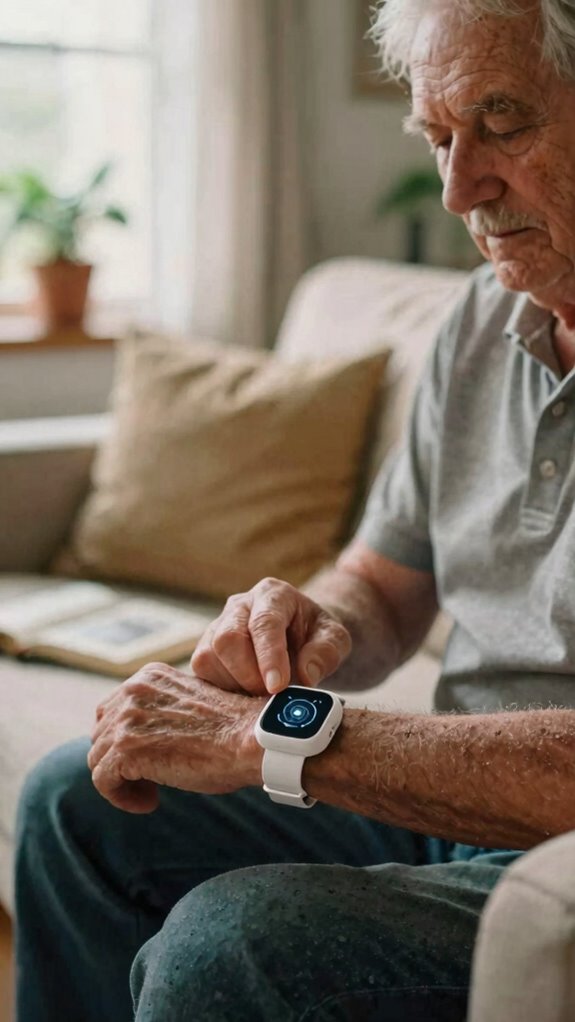
Moving past the old days of just sounding the alarm when dad’s about to take a tumble, AI-driven fall prediction systems are rewriting the rulebook on proactive safety. Think of it as a tech-savvy bodyguard that watches over him, using biometric monitoring and augmented sleep awareness to catch the sneaky signs of risk—like subtle gait changes or restless nights.
I recall the frustration of those stiff, outdated alarms that always felt more humiliating than helpful. Now, these systems analyze his daily movements and sleep patterns, predicting falls before they happen, all while keeping his dignity intact. Incorporating advanced smart sensor technology allows these systems to continuously learn and adapt to his unique movement patterns, enhancing their predictive accuracy.
No more feeling like a child or a bossy nurse—just smart, respectful support giving him the freedom to stay independent, safe, and, honestly, a little more like himself. Advances in radar-based health monitors continue to improve the accuracy and discreetness of these predictions, making them an even more reliable part of senior care.
FAQ
How Does Ambient Biometrics Work Without Physical Contact or Wearable Devices?
Ambient sensors, using high-frequency radio waves and touchless authentication, detect micro-movements and crucial signs through walls, allowing you to monitor health seamlessly. You benefit from invisible support, creating a safe, intimate environment without wearable devices or physical contact.
Can Predictive Guardrails Detect Imminent Falls Before Any Signs Appear?
Studies show fall prediction systems can reduce senior injuries by up to 60%. Your safety algorithms analyze gait, movement patterns, and environmental data, detecting subtle changes that signal an imminent fall, giving you time to stay protected.
What Measures Ensure Data Privacy With Invisible Safety Support Systems?
You guarantee data privacy by implementing robust data encryption and strict privacy protocols, so your personal health and activity information remains confidential. We’re committed to protecting your trust while supporting your independence subtly and securely.
How Are Circadian Lighting Systems Customized for Individual Sleep Needs?
Like tuning a radio to the perfect station, your circadian lighting system adapts through data like sleep patterns and preferences, enabling personalized sleep optimization and lighting customization that nurtures your unique rhythm, ensuring restful nights tailored just for you.
What Fallback Options Exist During Smart Home Device or Power Failures?
In power or device failures, you rely on security protocols with backup systems like battery backups and manual overrides. Emergency contacts are essential, ensuring someone you trust can assist or activate alternate support, keeping your loved one’s safety seamless and personal.