Smart Home Safety Without the Surveillance Creep
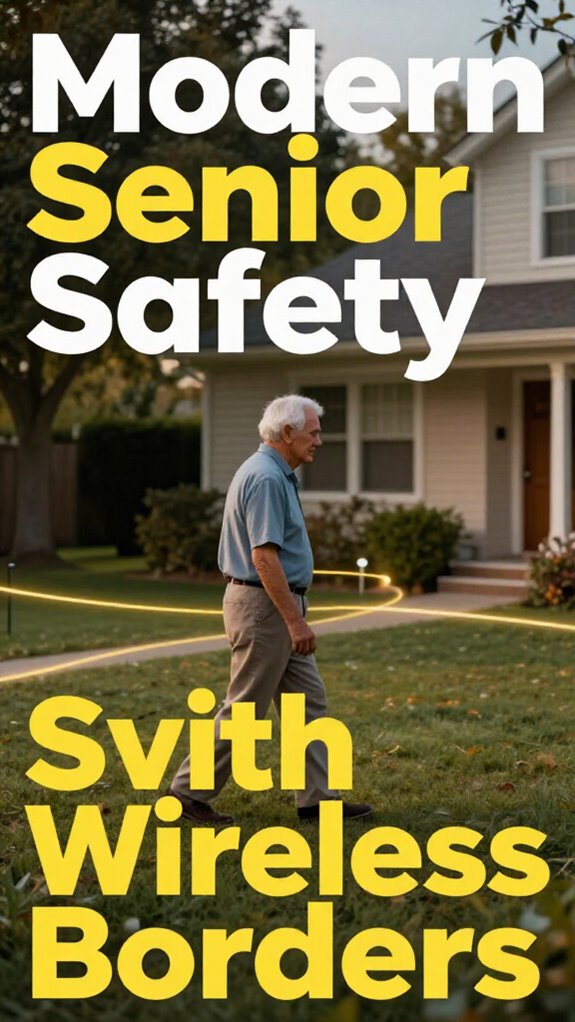
I installed motion sensors throughout Dad’s house—not cameras, just invisible guardians. Wi-Fi thermal tech flags bathroom incidents or unexpected midnight wandering. Alerts ping my phone instantly. Dad maintains dignity. I breathe easier knowing his independence stays intact while geofencing protects him from falls or confusion episodes.
Last March, Dad’s pattern changed. Extended kitchen stays triggered alerts. Turned out he was simply reorganizing—but those sensors caught when he actually fell reaching for cereal at 2 AM. That moment proved my investment worthwhile for SilverSoma readers navigating similar caregiver journeys.
Quick Takeaways
- Wi-Fi and thermal sensors create invisible safety boundaries that detect anomalies while respecting privacy and personal autonomy.
- Predictive systems monitor gait and behavioral patterns to identify health risks weeks before potential crises occur.
- Adaptive lighting and automated alerts activate based on individual routines, maintaining dignity and independence for seniors.
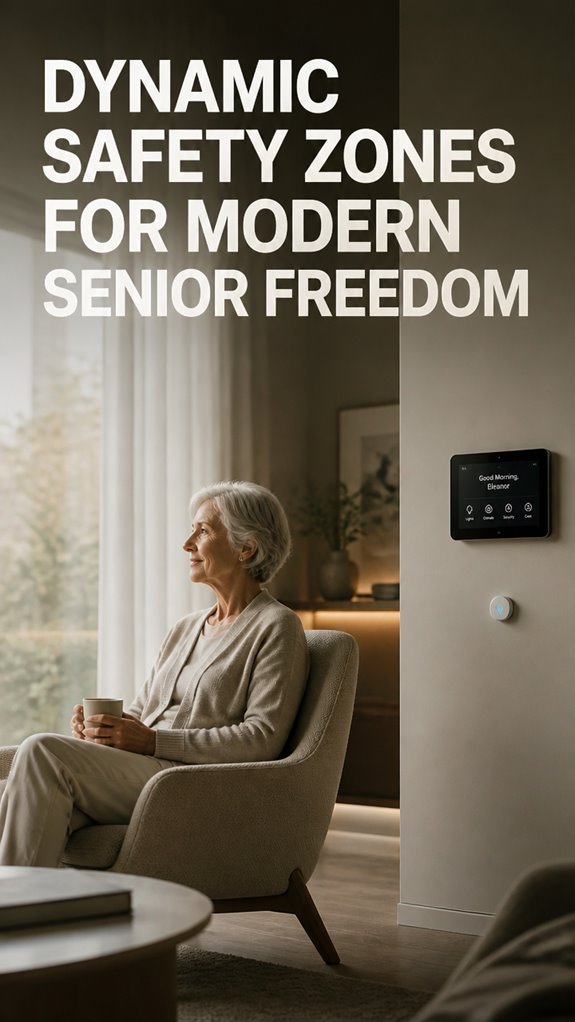
- Indoor GPS safety hubs allow seniors to define personalized zones that support freedom while providing security.
- Technology works best combined with regular human connection; sensors support but never replace genuine social engagement.
How Motion Sensors Create Invisible Boundaries Without Cameras
Why’re we still pretending that keeping seniors safe requires turning their home into a surveillance state? Motion sensors obliterate that false choice entirely.
You’re deploying Wi-Fi systems that track movement patterns without capturing a single visual frame—no creepy cameras stalking your dad’s every step. These invisible boundaries detect behavior tracking anomalies: unusual bathroom duration, unexpected exits at 3 AM. Your smartphone alerts without the privacy concerns that plagued corporate office surveillance culture you escaped years ago.
Thermal sensors, contact switches, indoor GPS hubs—they’re the dignified alternative. Indoor GPS safety hubs can be intelligently programmed to adapt to a senior’s routine, ensuring safety without invading privacy. Your 79-year-old dad maintains autonomy while you get genuine peace of mind. That’s the whole game.
Installing Thermal Alerts for Bathroom Safety
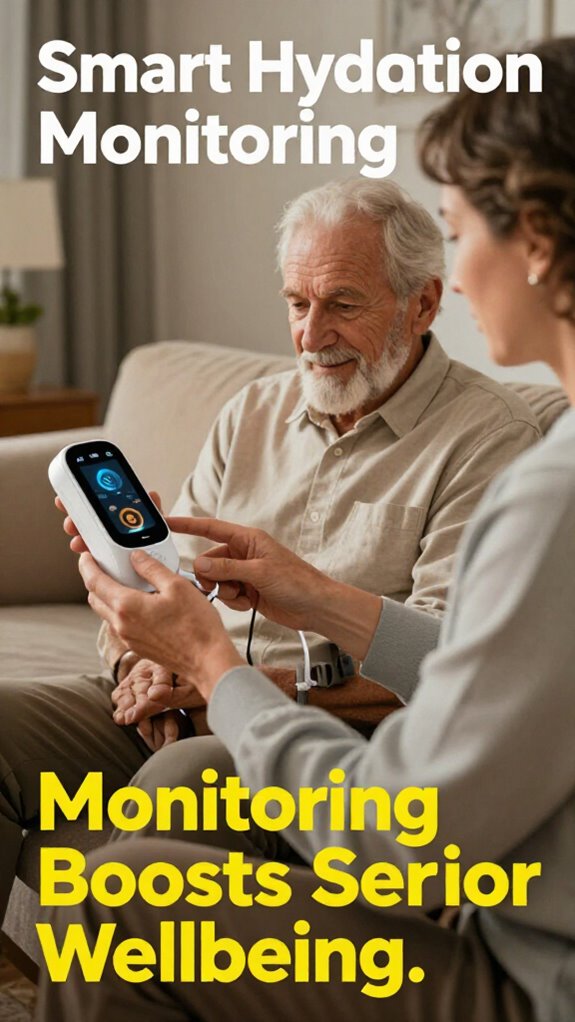
Install ceiling-mounted thermal alerts in your dad’s bathroom. They detect body heat and prolonged immobility—like my old boss detecting productivity without hovering. These sensors track geriatric hydration patterns and fall risks silently. Pair them with adaptive lighting that activates automatically, preventing those dangerous midnight stumbles. No cameras. No invasion. Just dignified autonomy wrapped in invisible guardrails. Your 79-year-old gets freedom; you get peace. That’s the whole deal. Incorporating hydration awareness and overnight oxygen monitors can further enhance safety by ensuring stable oxygen levels during sleep.
Spotting Red Flags Before They Become Crises

The beauty of predictive systems is that they flip the script on crisis management—instead of waiting for your dad to fall or forget his meds, you’re catching the subtle pattern shifts that signal trouble weeks before it happens.
Your motion sensors and gait analyzers become early warning systems. They’re tracking stride changes, bathroom visits, sleep disruptions—the invisible tells nobody notices. These systems can also incorporate weighted blankets, which provide subtle comfort and support, aiding better sleep and overall stability.
Sure, privacy concerns matter, but proper sensor calibration creates boundaries that respect autonomy while keeping him safe.
Think of it like your old boss’s quarterly reviews—except you’re actually preventing problems instead of reacting to disasters.
By integrating acoustic sound panels, you can even improve the overall environment, reducing background noise and making alerts more noticeable without overwhelming him.
Explaining Motion Sensors to Your Parents (Without the Pushback)
Now here’s where most people hit a wall—you’ve got all these predictive systems ready to roll, but your dad hears “motion sensor” and immediately thinks you’re turning his bedroom into a surveillance state, right?
Frame it differently. These aren’t cameras—they’re invisible guardians using thermal imaging and Wi-Fi sensing. Nobody’s watching him shower. Instead, emphasize wearable alternatives that give *him* control: he opts in, not opts out.
Address privacy concerns head-on. “Dad, this is about your freedom, not my monitoring.” Show him how thermal sensors detect falls without capturing anything visual. They rely on floor pressure sensors to monitor activity discreetly, so he stays autonomous. You sleep better. That’s the whole deal.
Moreover, explaining the security benefits of non-invasive thermal imaging technology can help ease his concerns.
Isolation Despite Constant Monitoring

Passive monitoring doesn’t replace genuine connection. You’re installing sensors everywhere, but your dad’s still lonely—trapped in a high-tech cage.
Here’s the truth: all those ambient biometrics and motion trackers? They’re watching, not engaging. Social interactions and emotional wellbeing can’t be optimized by algorithms.
Your old corporate overlords pulled the same move—surveillance instead of trust. Real freedom means he’s monitored *and* genuinely seen by actual humans.
Schedule weekly calls. Invite neighbors over. Use tech as backup, not replacement.
The most sophisticated system fails if nobody’s actually talking to him. Safety zones work best when they’re filled with people who actually care.
Radar Cannot Detect Falls
Here’s the reality check:
- Radar detects movement patterns not impact events
- Falls happen too fast for predictive algorithms to catch
- Wearable devices remain your actual safety net despite data privacy concerns
Look, I get it. You left corporate environments where people pretended solutions existed when they didn’t. Same energy here. Ambient biometrics are great for baseline health, but they’re not fall detectors. Your dad needs both—the invisible infrastructure *and* a trusted wearable. That’s true autonomy.
Smart Wall Sensors for Monitoring
When you’re installing smart wall sensors in your dad’s place, you’re basically replacing the old “check in with a phone call” security model—the one your former boss used to justify, recall?
With something that actually works without making him feel surveilled. These ambient sound detection systems pick up unusual patterns: extended silences, repeated falls, or distress calls.
Gesture control lets him summon help with a simple wave. No wearables. No badges of infirmity.
Just invisible architecture that respects his autonomy while keeping him genuinely safe.
Moreover, integrating ambient respiratory sensors can provide additional real-time air quality data, further enhancing safety and comfort. This approach aligns with the top smart wall sensors for health monitoring, offering a comprehensive and unobtrusive safety net. Finally, technology serving humans instead of the reverse.
FAQ
How Much Does It Cost to Retrofit an Entire Home With Dynamic Safety Zone Technology?
You’ll invest $15,000–$40,000 to retrofit your home with dynamic safety zone technology. Your home automation system and emergency protocols integrate seamlessly, liberating you from constant worry while maintaining complete independence and control.
Can Seniors Disable or Override Safety Alerts Without Notifying Family Members?
You can disable alerts through your personal control panel, giving you complete user autonomy over alert control settings. However, most systems notify family members when you override safety features, ensuring transparency while respecting your independence and freedom.
What Happens to Biometric Data if the Internet Connection Fails Unexpectedly?
Ninety percent of seniors fear losing autonomy through surveillance. Your biometric data encrypts locally when internet fails, protecting privacy concerns—you’re never trapped in a dependent system. You retain complete control.
Are These Monitoring Systems Compliant With Healthcare Privacy Regulations Like HIPAA?
You’ll find that most commercial systems aren’t HIPAA-covered entities, so they’re not legally bound by healthcare privacy rules. However, you can demand data encryption and explicit user consent before deploying any monitoring tech in your home.
How Long Does Battery Backup Last During Power Outages in Smart Home Systems?
You’ll find most systems give you 24-48 hours of battery life, though premium setups stretch toward 72 hours. Your power resilience depends on which devices you prioritize—sensors drain slower than hubs. Battery life matters when you’re reclaiming autonomy from the grid.
Summary
You’ve built the ultimate safety setup—sensors that serve, not snoop. Your dad’s dwelling’s now dotted with discrete detection devices that deliver peace without sacrificing privacy. Pretty powerful stuff, right? He’s got genuine autonomy again. You’ve basically created the corporate efficiency you once chased, but here it’s protecting what actually matters. Freedom and safety finally aren’t feuding anymore.