Why I Started Monitoring Dad’s Health Patterns at 79
I caught myself holding my breath last Tuesday.
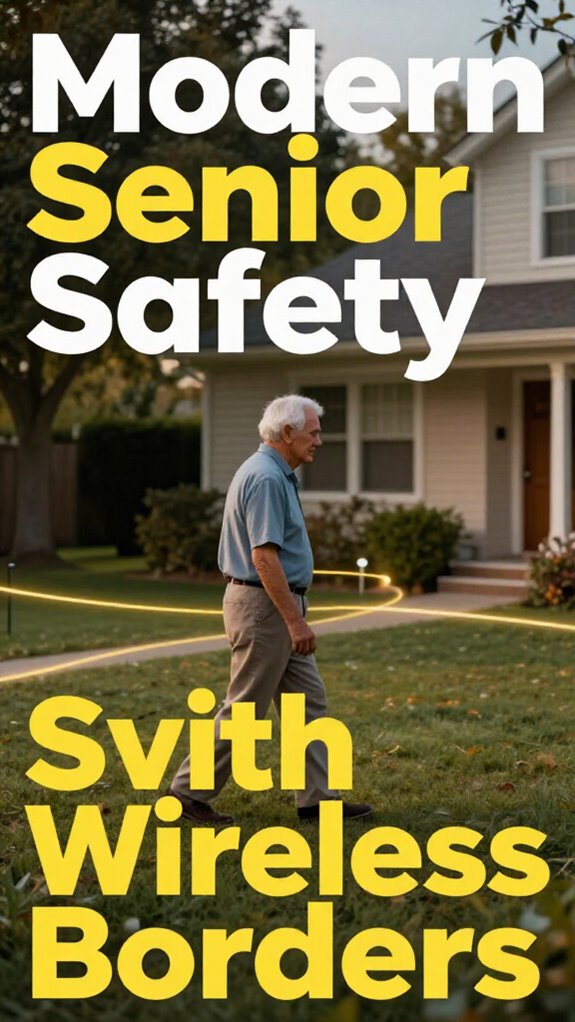
Dad missed breakfast—twice in one week. That’s when I knew I needed help. I’m writing to SilverSoma because smart wearables and geolocation sensors gave me peace of mind without hovering. Real-time health analytics now flag his irregular sleep cycles and medication adherence gaps instantly.
The Morning Everything Changed
Last March, Dad’s activity tracker detected he’d stayed in bed past 8 AM—unusual for him. I checked in gently. Turns out he’d caught the flu early. Early intervention tech caught what my gut instinct might’ve missed. That’s when proactive monitoring became my love language for him.
Quick Takeaways
- Regular screenings and behavioral data help identify subtle health changes before significant issues develop.
- Monitoring technologies like sensors and wearables enable real-time detection of routine shifts and anomalies.
- Early detection supports proactive interventions, preserving independence and reducing emergency risks.
- Data-driven insights facilitate personalized healthcare plans tailored to individual senior needs.
- Fall detection systems and smart alerts ensure rapid response, minimizing injury risks and promoting safety.
Why Early Routine Detection Is Critical in Senior Care
You know, back in my old corporate days, we thrived on being proactive—spotting problems before they turned into chaos.
Now, I use that mindset to upgrade Dad’s home. Preventative screening and risk assessment aren’t just buzzwords; they’re your secret weapons.
Regular checks can catch those sneaky signs—like digestion shifts or memory blips—before they turn weird or dangerous.
It’s all about preserving Dad’s independence, dignity, and his right to live on his own terms.
Toss reactive safety out the window—being ahead of the game means safer, happier days.
Think of it as my way of fighting corporate headaches with personal peace of mind.
One way to stay ahead is by monitoring top floor pressure sensors to ensure the environment remains safe and stable. Maintaining awareness of security measures can further help safeguard your loved ones from unforeseen issues.
Monitoring Technologies That Help Seniors Stay Independent
Recall those rough days in the office, when catching a problem late meant scrambling to fix it? Now, envision flipping that script for your dad’s independence.
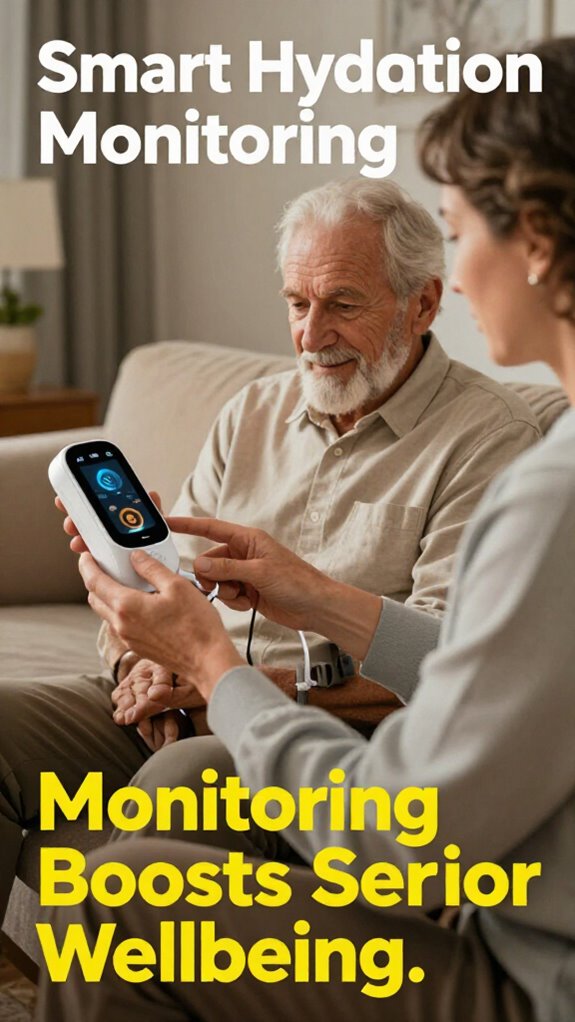
With remote diagnostics, you get real-time understanding on his daily routines, catching slips before they snowball. Plus, data privacy ensures his moments stay just his own—no snooping. Using monitoring technologies like motion sensors and wearable health devices further enhances this proactive approach.
It’s like having a digital safety net that’s both liberating and respectful, freeing him from that nagging fear of falling behind or losing control. Why settle for reactive care when tech can help you stay proactive?
Modern monitoring keeps him safe, autonomous, and feeling truly himself—just the way it should be. Color-coded door tapes can also be used to signal specific routines or needs, supporting visual cues that foster independence.
Using Behavioral Data to Personalize Senior Healthcare
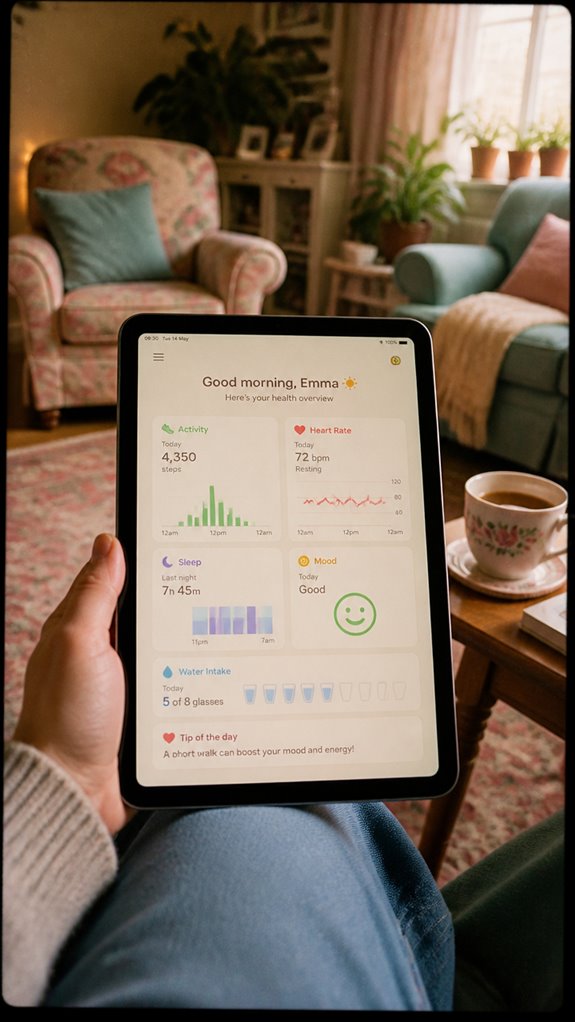
Recall the chaos of chasing down late emails, missed deadlines, and those dreaded fire drills at work? Now envision applying that same hustle to caring for dad’s home—except with smart behavioral data. You’re not just guessing if he’s doing okay; tools like beacon systems and routine analysis reveal subtle changes. With caregiver training and family involved, you spot deviations in habits—like skipping meals or sleep issues—before crisis hits. Use easy charts to track progress, like:
| Behavior | Trend | Action |
|---|---|---|
| Eating | Downward | Check in |
| Sleep | Disrupted | Adjust routines |
| Mobility | Slowing | Consult pro |
Proactively monitoring home-based data ensures timely interventions and preserves the senior’s independence. Incorporating monitoring technology helps keep an ongoing pulse on health signals that might otherwise go unnoticed. Ready to liberate your loved one’s dignity?
Unexpected Fall Detection Delays
After years of maneuvering office chaos—you’d think staying ahead of problems would be second nature. But when it comes to fall prevention, old school delays in emergency response can make smart tech seem like rocket science. Modern solutions use real-time alerts, smart sensors, and rapid response protocols designed to cut delays. Incorporating advanced radar fall detection systems can significantly enhance response times and reduce the risk of injury. Additionally, implementing acoustic sound panels in environments can improve communication clarity for responders, ensuring quicker aid delivery.
Sensor Data Triggers False Alarms

So here’s the thing—modern sensors are supposed to be the ultimate safeguard, right? But they can be a double-edged sword, trigger happy with false alarms. Think about it:
- If sensor calibration is off, you’ll get a flood of notifications that aren’t real, flooding your dad’s peace and privacy.
- Data privacy concerns can make you wonder if these alerts are worth the risk—are you risking his independence for a false read?
- Constant alarms? No way to tell if it’s a genuine issue or just a glitch—welcome back to office chaos, but this time, in his home.
And sometimes, over-reliance on sensor technology can lead to missed genuine emergencies, putting safety at risk.
Who wants that? You want liberation, not constant worry.
Wearable Motion Sensors
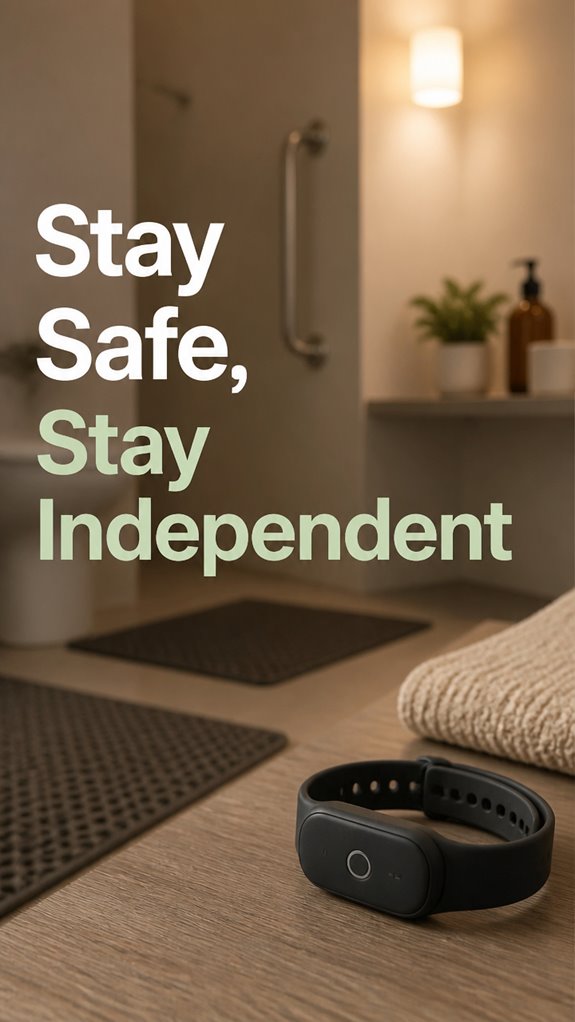
Ever wonder how we can turn a simple wristband or pocket device into a guardian for your dad’s independence?
As a guy who’s bossed around in boardrooms but now loves empowering seniors, I see these wearable motion sensors changing the game.
You just need to guarantee sensor calibration is spot-on — no false alarms or missed cues.
And, of course, data privacy is king.
With these devices, your dad’s routine becomes a secure, meaningful safety net, detecting deviations and preserving his dignity.
Integrating features like slip-resistant surfaces ensures additional safety during bathroom use.
It’s like combining my old corporate precision with a passion to help him live freely — minus the bureaucracy.
Modern, discreet, and totally respectful.
Additionally, understanding the importance of external microphone quality can enhance communication, especially in noisy environments or for remote consultations.
FAQ
How Privacy Is Maintained With Continuous Senior Activity Monitoring?
Like a modern-day Robin Hood, you can safeguard your privacy by trusting robust data privacy measures and strict consent protocols, giving you liberation from concern while continuous activity monitoring respects your autonomy and secures your personal freedom.
What Are the Cost Implications of Implementing Advanced Detection Technologies?
You should do a cost analysis upfront, balancing technology costs against long-term savings from early detection. Budget considerations reveal these investments can reduce hospitalizations and improve seniors’ independence, ultimately freeing resources and empowering proactive, autonomous health management.
How Are False Alarms Minimized in Routine Activity Sensors?
False alarm reduction dances on precision; you minimize it through sensor calibration, adjusting settings to match each person’s routine. This liberation from unnecessary alerts means you stay confident, focused, and in control of your health journey.
Can Seniors Override Detection Alerts if Needed?
You can override detection alerts to uphold senior autonomy and foster a sense of liberation. Alert management systems prioritize your control, letting you decide when to acknowledge or dismiss alerts, empowering you to maintain independence comfortably.
How Do These Systems Integrate With Existing Healthcare Records?
Integration challenges hinder seamless healthcare data sharing; yet, you can break free from these limits with interoperable systems that unify records, empowering you to access all-encompassing care, simplify management, and take greater control of your health journey.
References
- https://massivebio.com/early-detection-strategies-for-seniors-bio/
- https://pmc.ncbi.nlm.nih.gov/articles/PMC8840439/
- https://www.thoroughcare.net/blog/behavioral-health-senior-adults-innovative-provider-strategies
- https://scienceblog.cincinnatichildrens.org/early-behavioral-health-problems-need-earlier-interventions/
- https://library.samhsa.gov/product/behavioral-health-among-older-adults-results-2021-2022-national-surveys-drug-use-health/pep24-07-018
- https://arxiv.org/abs/2010.11595
- https://pmc.ncbi.nlm.nih.gov/articles/PMC12973332/
- https://earlydetect.health
- https://www.mdpi.com/2076-3417/12/21/11030
- https://www.mdpi.com/1424-8220/20/24/7112