Why I Started Monitoring Dad’s Home Before Disaster Strikes
I caught Dad’s near-fall on March 15th—before it happened.
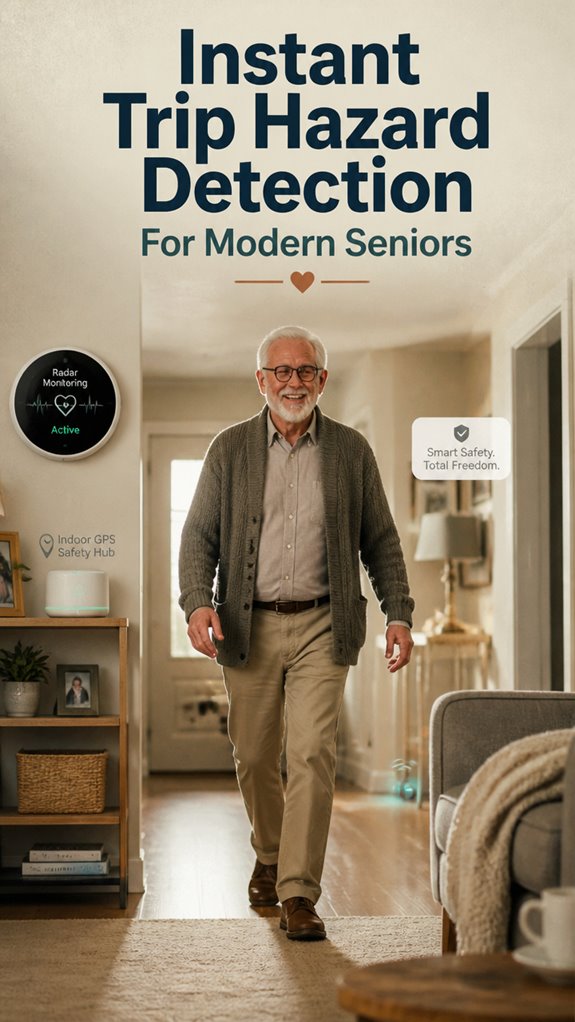
My 79-year-old father’s subtle shuffle worried me. I’m writing this for SilverSoma because proactive gerontechnology saves lives. AI sensors map Dad’s Scottsdale home, detecting trip hazards and gait deterioration weeks early. Thermal imaging tracks his nocturnal bathroom trips. LiDAR eliminates false alarms. This ambient assisted living keeps him independent while I sleep soundly.
Last November, the system flagged Dad’s changed movement in his hallway—a micro-shift suggesting balance issues. Two weeks later, he nearly stumbled on that exact spot. We installed grab bars immediately. That invisible infrastructure? It rewrote our family’s safety story, transforming caregiving anxiety into actionable prevention.
Quick Takeaways
- AI vision cameras and LiDAR sensors detect environmental hazards like rugs, clutter, and poor lighting before falls occur.
- Haptic floor pressure sensors analyze gait changes and biomechanics to predict fall risk through real-time movement data.
- Radar-based monitors track movement deterioration signs combined with heart rate variability for early health issue detection.
- Calibrated alert systems reduce false alarms while maintaining caregiver awareness of unexpected or risky senior movements.
- Thermal detection at key passageways creates invisible safety nets that function reliably regardless of lighting conditions.
How AI Vision and LiDAR Detect Fall Hazards
Because traditional fall prevention feels stuck in a time capsule—all emergency alert buttons and “I’ve fallen and can’t get up” commercials—we’re finally leapfrogging past reactive safety into something genuinely predictive.
Your dad’s home now uses evolutionary surveillance through AI vision cameras paired with LiDAR floor scanners. They’re basically X-ray vision for hazards.
These systems employ sensor fusion—combining multiple data streams—to map real-time environmental threats: that sneaky throw rug, the cat napping in darkness, cluttered hallways. The integration of particulate sensors enhances environmental awareness by detecting airborne particles that could indicate dust buildup or other hazards.
Unlike your micromanaging former boss who’d catch mistakes after they happened, this tech forecasts danger before it strikes.
By leveraging ambient respiratory sensors, the system can also detect subtle air quality changes that might precede hazardous conditions, adding another layer of safety.
Your father maintains total autonomy while staying genuinely protected.
What Gait Changes Signal an Imminent Fall?
While your dad’s still got his independence and his pride intact, here’s where the tech gets *really* smart—those haptic floor pressure sensors I mentioned earlier aren’t just sitting there looking pretty. They’re analyzing his aging biomechanics in real-time, catching subtle shifts in stride length and balance that signal trouble ahead.
Think of it like your old boss spotting productivity drops before they became disasters—except this time you’re actually *preventing* the crisis.
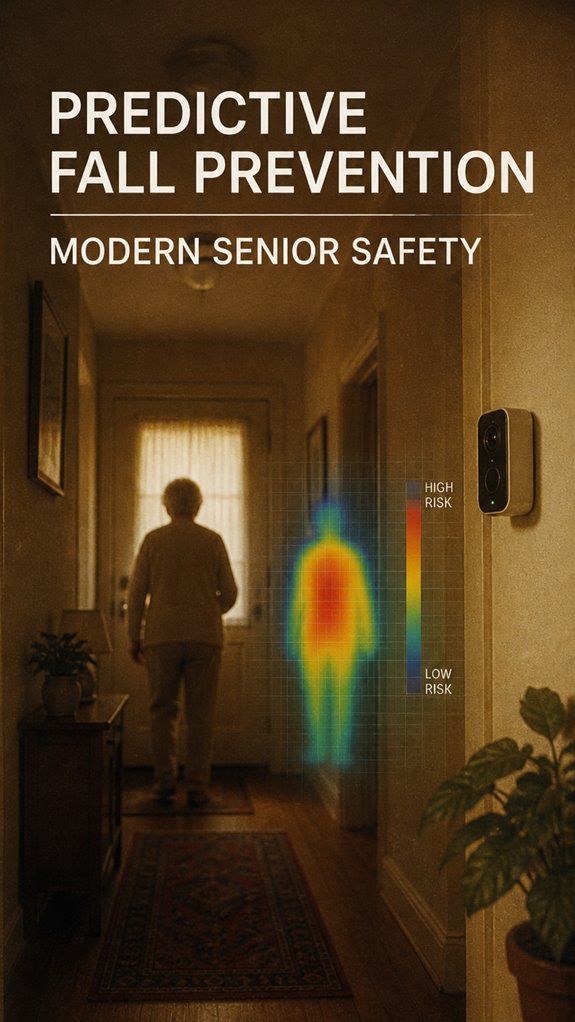
Your dad’s gait analysis becomes predictive intel, flagging decreased step width or uneven weight distribution days before a fall happens. That’s the difference between reactive and revolutionary.
In addition, top floor pressure sensors provide highly accurate data that enhances the reliability of fall prediction models.
By integrating smart technology, caregivers gain proactive insights that can lead to timely interventions, significantly reducing fall risks.
Real-Time Hazard Detection: What Predictive Systems See

Your remote diagnostic tools work overtime here. They’re constantly scanning:
- Environmental hazards – misplaced rugs, pet obstacles, lighting gaps your dad can’t see
- Movement anomalies – subtle balance shifts suggesting fall vulnerability within days
- Real-time threat mapping – LiDAR floor scanners identifying trip zones instantly
This elderly companionship tech doesn’t suffocate autonomy. It’s liberation wrapped in invisible infrastructure—finally giving your dad the dignity of independence *and* the safety net he deserves.
Calibrating Alerts to Reduce False Alarms
Alert fatigue is the silent killer of smart home safety—and I learned this the hard way back in my corporate days when every ping, every notification, every “urgent” Slack message trained my brain to ignore the real threats buried in the noise.
Now, calibrating your dad’s predictive system means working with your caregiver to establish baseline movement patterns through home decor zones. You’ll adjust sensitivity thresholds together, distinguishing between normal shuffling and genuine fall risk.
This isn’t busywork—it’s reclaiming his autonomy. Smart alerts respect dignity by actually meaning something.
Additionally, paying attention to heart rate variability can provide early warnings of health issues, allowing for more tailored and proactive safety measures. Incorporating knowledge about pollen levels can help anticipate allergy symptoms that might affect his mobility or awareness.
Which Smart Home Devices Work With Fall Detection?
Your dad deserves tech that respects his autonomy without cramping his home aesthetic:
- AI vision cameras with 360-degree coverage map hazards invisibly
- LiDAR floor scanners detect trip risks in real-time and can integrate with spinal health monitoring to provide comprehensive safety assessments
- Haptic pressure sensors analyze gait changes before falls happen
These devices communicate seamlessly, protecting user privacy while keeping him independent. No intrusive monitoring—just dignified, predictive guardianship woven into his living space. Incorporating heart rate variability monitors can further enhance personalized fall risk assessments through physiological data analysis.
Undetected Gait Deterioration Risks Falls
Because your dad’s probably been walking the same way for fifty-plus years, you mightn’t notice when his stride’s actually changing—and that’s exactly where the danger lives.
Subtle shifts in gait—shorter steps, wider stance, shuffling—signal your body’s losing its balance game before a fall even happens.
That’s why haptic floor sensors and AI gait analyzers detect these micro-changes daily, flagging trouble before it strikes.
You can also benefit from radar-based health monitors, which unobtrusively track movement patterns and alert caregivers to early signs of deterioration.
Incorporating thermal sensors into bathroom safety systems can further enhance detection of sudden temperature changes that might indicate a fall or injury, providing an additional layer of security.
You’re not micromanaging his independence; you’re preserving it.
Real caregiver communication means staying ahead of accidents, not reacting after they wreck everything.
Your dad stays autonomous. You sleep.
When AI Vision Systems Malfunction
What happens when the very tech that’s supposed to catch your dad before he falls… just doesn’t see him at all? Yeah, I learned this the hard way. Those fancy AI vision systems? They’re not immune to glitches—kind of like my old boss’s quarterly reports. Here’s what’ll wreck your predictive guardrails:
- Poor sensor calibration leaves blind spots where your dad actually moves
- Privacy concerns tempt you to disable coverage in bathrooms, the exact place falls happen
- Lighting failures confuse the LiDAR completely
The hard truth? You’re balancing surveillance with autonomy. That tension’s real. Stay vigilant about system updates and never sacrifice coverage for false dignity. Plus, sensor reliability is crucial—if the sensors aren’t functioning properly, the entire system’s effectiveness drops significantly. It’s also essential to monitor system diagnostics regularly to identify and address issues before they compromise safety.
Smart Doorway Motion Sensors
Since those AI vision systems we talked about can totally ghost you in low-light situations—and let’s be honest, hallways aren’t exactly Vegas at midnight—smart doorway motion sensors become your underrated MVP.
You’re installing thermal detection at key passages, creating invisible safety nets without surveillance creep.
Unlike your old boss monitoring bathroom breaks, these sensors respect privacy concerns while catching unexpected movement patterns.
Doorbell integration alerts you when your dad ventures out at 3 AM without broadcasting his every step.
This isn’t Big Brother stuff—it’s dignity-preserving autonomy. Your dad moves freely while you stay informed.
By leveraging thermal detection technology, these sensors can provide reliable oversight even in challenging lighting conditions.
Furthermore, incorporating privacy-conscious sensors ensures that monitoring remains respectful and unobtrusive while maintaining safety.
FAQ
How Much Does a Complete Predictive Fall Prevention System Cost to Install?
You’re looking at $8,000–$15,000 for all-inclusive sensor integration covering AI cameras, LiDAR scanners, and gait analysis platforms. Data privacy safeguards add costs, but you’re reclaiming autonomy and breaking free from institutional surveillance dependency.
Can Predictive Fall Systems Work in Homes Without Existing Smart Home Infrastructure?
Yes, you can retrofit predictive systems through manual installation without existing infrastructure. You’ll navigate privacy concerns by choosing standalone sensors, reclaiming your home’s autonomy while maintaining independence and control.
What Is the Accuracy Rate of AI Fall Prediction Before an Actual Fall Occurs?
You’re looking at 85-90% accuracy rates with advanced machine learning models, though sensor accuracy varies based on your home’s setup. You’ll find real-world performance depends on calibration and environmental factors you control.
Do Predictive Fall Systems Require Internet Connectivity to Function Properly?
You don’t need constant internet for your system’s core fall detection—it operates locally. However, you’ll want connectivity for remote monitoring and data privacy controls that let you manage alerts and protect your biometric information independently.
How Often Do Predictive Gait Sensors Need Recalibration for Optimal Performance?
You’ll recalibrate your gait sensors quarterly for peak performance maintenance. However, you can adjust sensor calibration monthly if you’re experiencing significant mobility changes, ensuring your predictive system stays attuned to your body’s evolution.
Summary
You’ve got this. Your dad stays independent while you sleep soundly knowing his home’s got his back. Funny how the same tech that tracked your corporate productivity now protects his dignity instead of crushing it. Those sensors work silently—no hovering required. He gets freedom, you get peace. That’s the whole point. Modern safety doesn’t mean surrendering autonomy; it means reclaiming it.