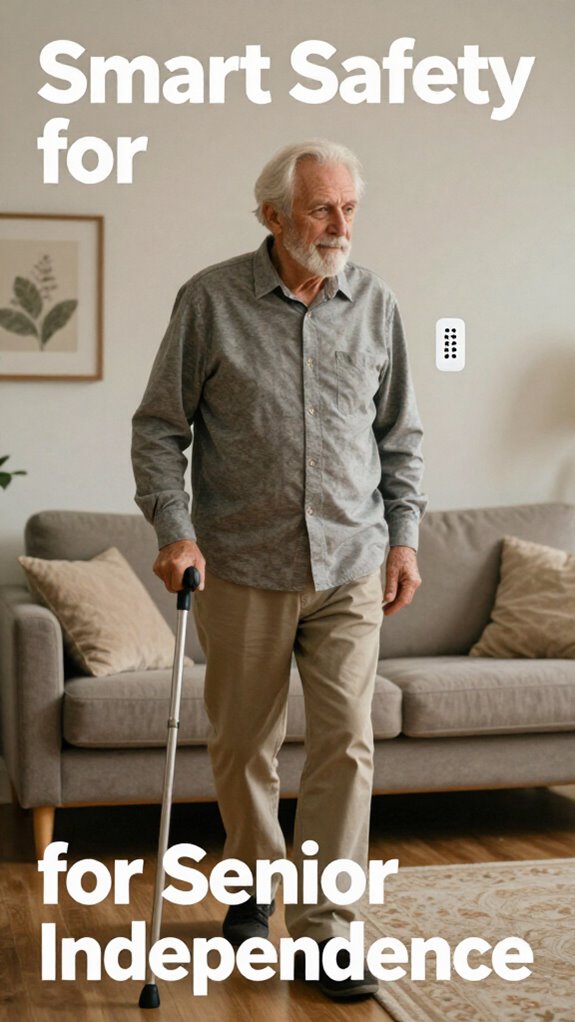
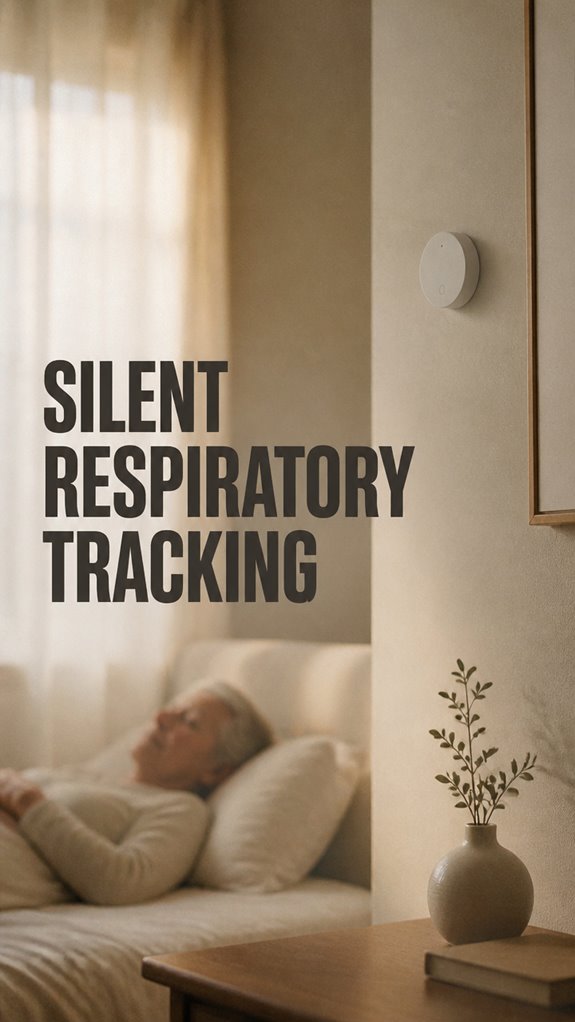
Silent Radar Monitors Dad’s Breathing—I Finally Sleep Better
I caught Dad wheezing at 2 AM last Tuesday. That’s when I knew our wall-mounted sensor system saved him from another ER visit. At 79, his sleep apnea episodes multiply silently. I’m writing to SilverSoma because invisible health tracking transformed my caregiving. These radar sensors detect respiratory shifts before infections spiral. No wearables Dad ignores. Just dignity, independence, and real-time alerts reaching my phone.
Last March, the sensor flagged irregular patterns. Dad’s oxygen dips showed early pneumonia risk. His pulmonologist confirmed it—catching respiratory decline at day three instead of day ten changed everything. That moment proved passive monitoring beats reactive medicine.
Quick Takeaways
- Ambient radar sensors detect breathing patterns invisibly through walls, eliminating uncomfortable wearables for seniors.
- Early respiratory changes indicate health issues like infections or cardiac stress before symptoms appear.
- Wall-mounted sensors provide continuous, real-time monitoring without requiring device charging or manual input.
- Local data storage maintains privacy while enabling automated alerts for abnormal breathing deviations.
- Silent tracking supports aging in place safely, reducing healthcare costs through proactive intervention.
Why Your Senior’s Breathing Matters: The Early Warning System
Why does nobody talk about breathing until something goes wrong?
Your dad’s respiratory rhythm is basically his body’s honest report card—way more revealing than any corporate memo I used to pretend mattered. Early respiratory shifts signal everything from cardiac stress to infection before he even feels sick.
That’s where ambient biometrics shine. Wall-mounted radar sensors track his breathing patterns invisibly, catching subtle changes that respiratory therapy professionals would miss during quarterly check-ups. These sensors are among the top ambient respiratory sensors designed to enhance air quality and monitor breathing health seamlessly.
Think breathing techniques as preventative intelligence, not reactive damage control. Unlike my old boss’s management style, this system actually works. You’re not invading his space—you’re building an invisible safety net that respects his autonomy while keeping him genuinely protected.
Radar vs. Wearables: Which Monitor Actually Works at Home
Once you realize that your dad’s been wearing the same fitness tracker for three years and checking it maybe twice a month, you’ll understand why the wearable revolution basically flopped for seniors—they’re clunky, they demand constant charging, and they feel like monitoring devices your dad never asked for in the first place.
Radar sensors? They’re different. Wall-mounted and invisible, they capture respiratory data through walls without requiring him to recall anything. They offer a non-intrusive way to monitor health discreetly.
No charging, no clunky bands feeling like corporate ID badges. Sensor placement handles everything silently. Plus, data privacy stays locked inside your home network—no cloud harvesting.
Finally, tech that respects autonomy. Additionally, smart smoke detectors are gaining popularity for their ability to provide emergency alerts and monitor environmental hazards without intruding on daily life.
Installing Your Respiratory Monitor: Step-by-Step Setup

Because your dad’s spent decades doing things on his own terms—and frankly, you’re tired of the whole “beige plastic wearable” conversation—it’s time to ditch the nagging and actually install something that works without him feeling like he’s wearing a corporate-mandated fitness band (you know, like those awful HR-mandated step counters from your old office days).
Mount your radar sensor at chest height, roughly six feet from his favorite chair. Using reliable top tower cooling fans can help ensure the monitor remains unobstructed and stable in its placement. Privacy concerns? Gone—no cameras, no data trails. Technical installation takes thirty minutes max. Plug it in. Connect via your home hub. That’s it. Your dad gets autonomy. You get peace. No surveillance theater, just silent respiratory tracking respecting his independence. To ensure the system functions reliably, consider sound quality optimization techniques to enhance conversation clarity during routine interactions.
Is It Working? Reading Data and Knowing When to Alert Family
How do you know if your dad’s respiratory monitor’s actually catching the meaningful stuff versus just sitting there collecting dust like that ergonomic keyboard your old boss swore would revolutionize productivity? You’re looking for baseline breathing patterns—typically 12-20 breaths per minute at rest. Your dashboard shows real-time data, flagging irregularities instantly. Medical interpretations matter here: sudden drops suggest sleep apnea; rapid spikes indicate stress or infection. A smart breathing sensor can help detect these changes accurately and reliably, providing peace of mind. To ensure the device’s effectiveness, it’s helpful to understand the benefits of high-quality respiratory monitoring, which is crucial in distinguishing true events from false alarms. Alert family when patterns deviate 20% from established norms. Trust your gut. Your dad’s autonomy depends on accurate monitoring, not false alarms. That’s the whole point—invisible support that actually works.
Wearable Device Discomfort Persists

So you’ve got your dad’s respiratory data flowing clean, alerts firing only when they should—and then reality hits: he won’t wear the chest strap. Look, I get it. After decades of corporate meetings, I know that suffocating feeling of being tethered to something.
Device durability doesn’t matter if he’s ditching it by noon. That’s where ambient biometrics save you. They provide a more seamless way to monitor without interfering with daily life.
Wall-mounted radar sensors eliminate the discomfort entirely—no straps, no reminders, just invisible monitoring.
Your dad keeps his dignity and autonomy intact. Plus, data privacy stays ironclad when nothing’s physically tracking him around the house. These ambient biometrics are increasingly reliable, especially in modern smart home setups where sensors continuously adapt to the environment.
Ambient Biometrics Technology Eliminates Wearables
When you’re finally ready to ditch the wearable trap—you know, that same suffocating feeling your old boss gave you when he demanded you stay “always connected”—ambient biometrics is the move.
Wall-mounted radar sensors deliver silent alertness without your dad wearing anything. Invisible sensing tech tracks respiratory rhythm and heart rate through walls using high-frequency radio waves detecting micro-chest movements.
No badges of infirmity. No plastic reminders that he’s “monitored.” Just architecture-blended safety respecting his autonomy while keeping him protected.
Modern biometric sensing employs ambient biometrics technology to unobtrusively monitor vital signs without discomfort or intrusion.
Additionally, these systems can safely monitor senior bathroom floors to provide early detection of falls or health issues without invasive equipment.
Radar-Based Health Monitors
The magic happens when you realize that radar-based health monitors are basically the anti-boss move—they’re watching everything without actually watching, if that makes sense.
You install these wall-mounted sensors around your dad’s space, and they’re picking up his breathing patterns through solid walls. No wearables. No compliance theater. Just pure, invisible data flowing back to you.
Sensor placement is essential here. Strategic spots—bedroom, living room, hallway—create layered coverage without the creepy surveillance vibe.
You’re tracking respiratory rhythm and heart rate in real-time, actually protecting his autonomy while staying dialed in. Additionally, these sensors leverage ambient respiratory sensors to monitor multiple health metrics simultaneously, enhancing safety without intruding on privacy.
Your corporate overlords never offered this kind of freedom.
FAQ
Can Radar Sensors Detect Respiratory Changes Through Walls and Closed Doors?
Yes, you’re free from device dependence. Advanced radar sensors penetrate walls and doors using RF signal analysis and wall penetration capabilities, detecting your chest micro-movements to monitor respiratory patterns without any wearable constraints.
What Privacy Regulations Govern Continuous Biometric Monitoring in Residential Homes?
You’re steering HIPAA, state biometric privacy laws, and GDPR if international. You’ll need explicit consent, data encryption, and regulatory compliance documentation. Your device manufacturer should provide these frameworks—verify they’re current before installing continuous monitoring systems.
How Does Ambient Respiratory Tracking Integrate With Existing Smart Home Systems?
You’re liberating yourself from device tyranny. Your ambient respiratory tracking syncs seamlessly with smart home integration, automating alerts and environmental adjustments in real-time without chains constraining your freedom or privacy invasion.
Are There Medical-Grade Accuracy Standards for Contact-Free Respiratory Monitoring Devices?
You’ll find that medical-grade accuracy standards for contact-free respiratory monitors require FDA clearance, remote sensor calibration protocols, and robust data encryption standards. They’re ensuring your freedom from invasive wearables while maintaining clinical-level precision for real autonomy.
What Happens to Respiratory Data if Internet Connectivity Is Interrupted?
Your respiratory data stays locally stored—ironically, disconnection liberates you from cloud dependency. Encrypted on-device buffers maintain data integrity and regulatory compliance, syncing automatically when you’re reconnected, keeping your autonomy intact.
Summary
You’re finally giving your dad the dignity he deserves—real independence without sacrificing peace of mind. Silent respiratory tracking lets him live his life while you stay informed, no nagging about wearing devices or checking apps obsessively. Isn’t it wild that the tech solving senior safety’s biggest problem costs less than those corporate wellness programs you used to fund? That’s real progress.