Protecting Dad’s Lungs: Why Real-Time Air Quality Matters
I watched Dad struggle through last winter’s indoor air season, and I knew something had to change.
My 79-year-old father deserves clean breathing space. Medical-grade HEPA filtration isn’t optional—it’s essential. Real-time PM2.5 monitors alert me before respiratory flares happen. Smart sensors track particulate density hourly. I’m sharing this on SilverSoma because aging parents need proactive wellness, not crisis management. Dad maintains independence while I monitor his environment remotely.
Last March, Dad’s oxygen levels dipped during high pollen season. His pulmonologist recommended particulate monitoring. Within weeks of installing smart air purifiers, his breathing normalized. Now he checks his air quality dashboard daily—no anxiety, just awareness. That peace of mind? Priceless.
Quick Takeaways
- Real-time air quality monitors detect particulate spikes early, enabling timely interventions to protect aging respiratory systems from dust, pollen, and nanoparticles.
- Medical-grade HEPA filters trap allergens more effectively than consumer models, supporting respiratory health and autonomy for seniors in indoor environments.
- Smart home integration with air quality monitors provides continuous tracking and automated alerts via phone, facilitating proactive rather than reactive health management.
- Monthly filter inspections and phone reminders ensure optimal performance, preventing neglect that could compromise vulnerable lungs and device efficiency over time.
- Prioritizing bedroom air quality and using indoor botanical gardens creates personalized airflow zones that enhance longevity and support nervous system restoration for seniors.
Why Senior Health Depends on Home Air Quality
How many of us spent years in sterile office buildings with broken HVAC systems, watching our productivity plummet while our boss insisted everything was “fine”—when really, we were all just slowly suffocating on recycled air and poor ventilation? Your dad’s facing the same trap, except the stakes are way higher. Poor indoor ventilation doesn’t just tank productivity; it accelerates aging. Airborne pathogens linger longer in stagnant environments, forcing his immune system into overdrive. Implementing air quality monitoring can help detect harmful particles before they cause health issues, ensuring a safer environment for your loved ones. Medical-grade air purifiers with real-time particulate sensors aren’t luxury items—they’re autonomy insurance, protecting his dignity by keeping him genuinely independent at home. To effectively manage indoor air quality, integrating the latest ambient respiratory sensors is crucial for ongoing detection and response.
How Particulate Pollution Accelerates Respiratory Decline in Seniors
Your dad’s lungs aren’t built like they were at 40—and that dusty air you both tolerated in those soul-crushing office cubicles? It’s still wreaking havoc. Here’s the brutal truth: indoor pollen and nanoparticle infiltration silently damage aging respiratory systems.
Each breath he takes pulls microscopic invaders deeper into compromised airways, accelerating decline faster than you’d expect. Regular monitoring with air quality monitors can help you detect these threats early, preventing further harm.
You can minimize this damage by using top phone light flashers that alert you to poor air quality, helping you take swift action before it’s too late.
Your corporate past taught you that prevention beats crisis management. Same philosophy applies here.
Medical-grade air purifiers aren’t luxuries—they’re freedom. They’re autonomy. They’re your dad breathing easier, staying independent, and reclaiming dignity without constant doctor visits.
Medical-Grade vs. Consumer Filters: What Seniors Need

When you’re standing in the air purifier aisle—scrolling through specs on your phone like you used to obsess over quarterly reports—it’s easy to get bamboozled by marketing speak that sounds identical whether you’re dropping $200 or $2,000.
Here’s the truth: medical-grade HEPA filters actually *trap* indoor allergens your dad’s lungs can’t handle anymore. Consumer models? They’re basically security theater.
Medical-grade filters last longer—we’re talking 12-18 months versus 3-6—which means fewer replacements and genuine filter lifespan value. Your old boss would’ve called that ROI.
Skip the gimmicks. Invest in real filtration that honors his autonomy and keeps him breathing easy. Medical-grade filters offer superior performance and durability, ensuring his health isn’t compromised by cheaper alternatives.
Picking an Air Quality Monitor That Fits Your Home
Now that you’ve locked in the right filter, it’s time to actually *see* what you’re breathing—because what good’s premium filtration if you don’t know whether the air quality’s improving or tanking?
You’ll want a smart ventilation monitor that tracks particulates in real-time, showing you exactly which indoor allergens are lurking. Think of it like dashboard analytics for your dad’s lungs.
Look for displays that integrate with his existing smart home hub—no clunky separate devices cluttering his space.
Real autonomy means he understands his environment. Skip the corporate-grade overkill; grab something intuitive he’ll actually glance at daily.
Priority Rooms for Protecting Senior Air Quality
Where’d you think most of the nastiness actually settles in your dad’s place—the living room where he spends eight hours binge-watching documentaries, or the bedroom where he’s breathing in eight hours of stale air while he sleeps?
You’re right—it’s both.
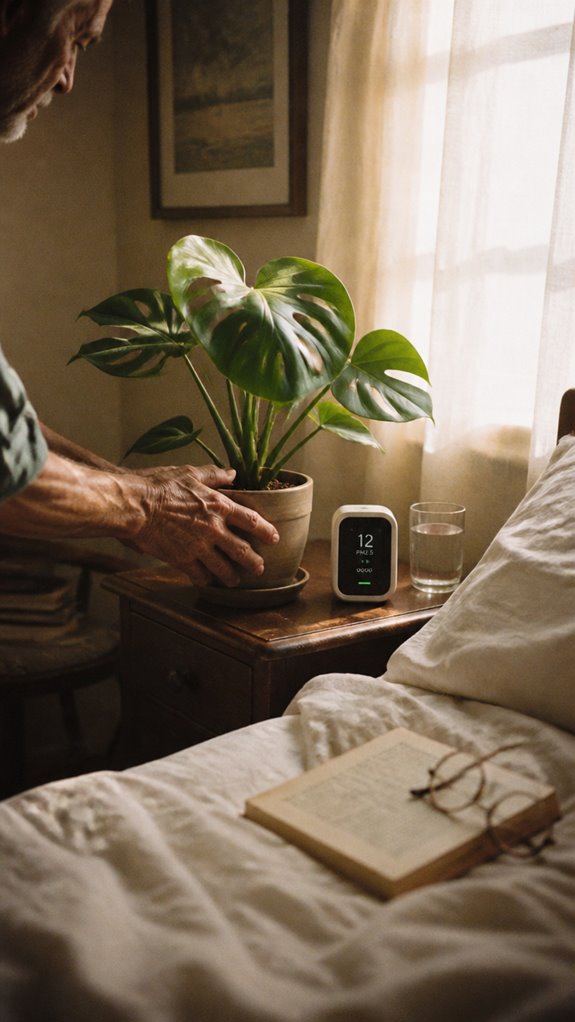
Prioritize his bedroom first. That’s where longevity actually happens, where his nervous system resets. Then tackle the kitchen, where cooking particles linger like your old boss’s negativity.
Strategic indoor botanical gardens in these zones? Game-changer. They’re not decoration—they’re active filtration.
Layer personalized airflow zones around his favorite spots. Let him control his own sanctuary.
Dignity means breathing clean air without feeling monitored. Incorporating air quality monitoring technology can help track and maintain healthy levels without intrusion, especially with the help of HEPA air purifiers, which are highly effective at capturing tiny airborne particles.
Connecting Air Monitoring to Your Senior’s Overall Health Dashboard
Here’s the thing—air quality data means absolutely nothing if it’s just sitting in some siloed app collecting dust like your old company’s unused project management software.
You’re integrating indoor humidity and allergen exposure metrics directly into your dad’s wellness dashboard, creating a unified intelligence center. When his biometric sensors flag respiratory strain, they automatically cross-reference real-time air particulate levels.
By adding top particulate sensors, you ensure the air quality data is accurate and reliable, enabling meaningful insights. Analyzing particulate levels with advanced air monitoring technology provides deeper context for his respiratory health and environmental triggers.
This interconnected approach transforms isolated data points into actionable insights. Your father gains autonomy through transparency—he sees how environmental stressors impact his well-being. No more fragmented health information.
Air Quality Triggers Respiratory Decline
When your dad’s respiratory system starts its slow decline—and let’s be real, it will if we’re not proactive—the culprit isn’t always some mysterious virus or age-related deterioration you can’t control.
Indoor pollen and mold spores are silent assassins lurking in stagnant air, triggering inflammation that compounds breathing difficulties.
Your medical-grade air purifier isn’t just a gadget; it’s liberation from the suffocating office cubicles of reactive medicine.
Monitor particulate levels in real-time through your health dashboard.
When air quality dips, respiratory decline follows within days. Stay ahead of it. Increasing use of radar-based health monitors can also help you keep a close eye on air quality and detect early signs of respiratory issues.
Implementing these advanced sensors can significantly improve air quality monitoring, helping to identify subtle changes before symptoms manifest.
When Air Quality Drops
Dust those old corporate cubicle coughs from your memory—your dad’s home doesn’t have to mimic that stale-air hellhole your ex-boss trapped you in for years.
When air quality drops, you act fast. Indoor pH levels crash, sparking mold proliferation that chokes lungs like that fluorescent-lit prison you escaped.
Don’t let reactive caregiving steal dignity—grab predictive guardrails now. Robotic pet vacuums can help maintain cleaner air by reducing dust and allergens that contribute to poor air quality.
Scan with ambient biometrics; if particulates spike, trigger circadian LED boosts and medical-grade purifiers.
You can also monitor air quality proactively to stay ahead of potential hazards.
You’ve ditched boss-man’s stale air—why chain Dad to it? Reclaim autonomy, son. Breathe free. Your modern sanctuary demands it.
HEPA Filter Replacement Schedules
Your dad’s HEPA filter isn’t like those crusty office ventilation systems that nobody replaced until the entire floor smelled like old coffee and broken dreams—this one actually matters, and you’re gonna stay on top of it.
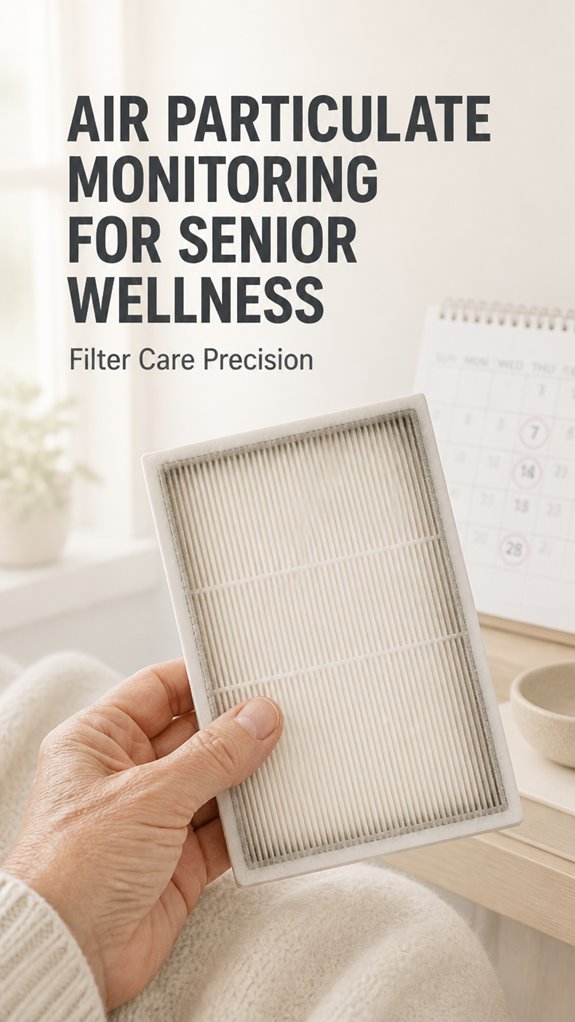
Modern air purifier innovations demand real filter lifecycle management. Swap that HEPA every 6-12 months, depending on usage and your local air quality. Check it monthly—if it looks gray instead of white, replacement time’s here.
Pro tip: set phone reminders so you’re not scrambling later. This isn’t corporate negligence territory anymore. Your dad’s lungs deserve precision care. Additionally, incorporating filter lifecycle management can help extend the efficiency of your device and protect sensitive skin that might be irritated by airborne pollutants.
Furthermore, incorporating top floor pressure sensors can provide precise monitoring to optimize your filter replacement schedule and ensure consistent air quality throughout the space.
FAQ
Can Air Quality Monitors Integrate With Existing Smart Home Systems for Automated Alerts?
You’ll seamlessly integrate air quality monitors into your existing smart home ecosystem, enabling automated alerts that notify you instantly when particulate levels spike, freeing you from constant manual checking and reclaiming your autonomy.
How Do Seasonal Changes Affect Particulate Levels in Senior Living Spaces?
Your home’s particulate variation intensifies seasonally—you’ll encounter higher pollen counts in spring, wildfire smoke in summer, and heating system dust in winter. You’re not trapped by these fluctuations; modern sensors detect them automatically.
What Is the Cost Difference Between Medical-Grade and Consumer Air Purification Systems?
You’ll find medical-grade systems cost 3-5x more, justified by superior filtration efficiency that’ll slash your medical expenses long-term. You’re investing in liberation from particulate toxins that drain your independence and energy.
Do Air Purifiers Require Professional Installation or Can Seniors Manage Independently?
You’ll manage DIY installation independently—most modern purifiers require zero professional setup. Simple user maintenance like filter swaps keeps you autonomous and in control of your air quality without depending on technicians or costly service calls.
How Often Should Air Quality Baseline Measurements Be Recalibrated for Accuracy?
You’ll recalibrate quarterly to maintain baseline accuracy—freedom demands precision. Your calibration frequency shouldn’t feel like servitude; it’s reclaiming control over your breathing space. Skip it, and you’re surrendering to invisible toxins.
Summary
You’ve built your dad’s sanctuary—not some sterile medical facility, but a living space that breathes intelligence. Those sensors? They’re his silent guardians, whispering data while he reclaims what matters: autonomy. Like Odysseus steering unseen currents, he’s now equipped to chart his own wellness course. That’s not just technology; that’s dignity wrapped in modern ingenuity.