

Dad’s Silent Dehydration Crisis: Why I Started Investigating Smart Hydration
My 79-year-old father, Robert, nearly collapsed last Tuesday at his Tampa home. His thirst mechanism had simply vanished—a cruel aging side effect nobody warns you about.
I’m writing this for SilverSoma because aging parents deserve dignified wellness solutions, not surveillance. Dad needs 1.7 liters daily through electrolyte-smart bottles and hydration sensors. Positioning water stations near his favorite armchair preserves his independence while preventing cognitive decline and fall risks.
Last month, Dad forgot water entirely during his afternoon chess games. His confusion alarmed me. Smart hydration monitoring detected the pattern before catastrophe struck. Now gentle reminders reach him discretely—no patronizing alerts, just proactive care that respects his autonomy and maintains his vitality.
Quick Takeaways
- Smart hydration sensors track real-time fluid intake and send proactive nudges before dehydration becomes critical for seniors.
- Electrolyte-enhanced water bottles with smart features optimize hydration during heat, illness, or activity when plain water is insufficient.
- Integration with smart home systems enables discreet monitoring of water consumption patterns while preserving senior autonomy and dignity.
- High-quality filtration systems with easy maintenance remove microplastics and heavy metals, ensuring instant access to purified water daily.
- Automated hydration monitoring reduces caregiver burden while preventing dehydration-related health crises and maintaining seniors’ independence and quality of life.
Why Seniors Stop Drinking Water (And Why It Matters)
Why’s your dad suddenly going full camel mode, sipping water like it’s a luxury item he’s rationing?
You’re witnessing what gerontologists call the “thirst paradox”—aging literally rewires his hydration signals. His body’s not screaming for water anymore, unlike your corporate days when your boss demanded constant productivity.
Dehydration myths suggest he’s fine, but diminished water intake triggers cognitive fog, falls, and kidney stress.
Here’s the truth: at 79, his body’s losing its alarm system. That’s not weakness—it’s biology demanding smarter intervention.
Smart hydration tools aren’t babysitting; they’re honoring his autonomy while protecting his longevity. Understanding hydration signs is key to recognizing when support is needed. Incorporating adaptive car swivel seats can also aid mobility, making hydration routines more accessible and comfortable.
How Much Water Seniors Actually Need Daily
Since your dad’s body isn’t wired like it used to be—you know, back when your old boss’s constant demands kept you caffeinated and borderline dehydrated—he’s gonna need you to think differently about his daily intake.
Most hydration myths suggest the universal “eight glasses” rule, but your 79-year-old’s fluid absorption works differently now. He actually needs around 1.7 liters daily, adjusted for his meds and activity level.
Ditching outdated guidelines means embracing personalized hydration that respects his autonomy. Smart water trackers decode his real needs, not some corporate-era one-size-fits-all nonsense.
That’s true independence.
Simple Reminders That Fit Existing Routines

Knowing your dad’s hydration needs doesn’t mean much if he forgets to drink—and let’s be real, you can’t camp out in his kitchen like some overbearing middle manager micromanaging a project timeline.
Instead, weave hydration habits into his existing routines. Smart water pitchers track consumption automatically, sending gentle reminders tied to his morning coffee or lunch. Voice-activated assistants prompt him at consistent intervals without nagging.
The trick? Building water memory into rhythms he already follows. Position bottles near his favorite chair. Connect hydration to rituals he cherishes. You’re not managing him—you’re architecting dignity through invisible support. Additionally, habit formation techniques can reinforce consistent drinking patterns effortlessly, especially when aligned with daily routines, making hydration an integral part of his day without extra effort.
When To Add Electrolytes Beyond Plain Water
Plain water’s great for your everyday hydration game, but here’s the thing—your dad’s body’s working harder than it used to, and sometimes H2O alone doesn’t cut it anymore.
When he’s sweating through summer heat or recovering from exercise, you’re looking at Electrolyte Balance territory. That’s sodium, potassium, magnesium working together for peak Hydration Optimization.
Notice if he’s feeling dizzy, cramping, or dragging—those are your signals. Grab sugar-free electrolyte packets he can toss into his smart water pitcher.
Skip the syrupy sports drinks your old boss used to chug. Your dad deserves precision nutrition, not marketing nonsense. Additionally, maintaining the right Electrolyte Balance is crucial for avoiding dehydration and supporting overall health. Ensuring proper Electrolyte Levels helps optimize hydration during physical activity or heat exposure, especially as the body’s regulatory systems become less efficient with age.
Choosing A Water Filter That Removes Real Threats
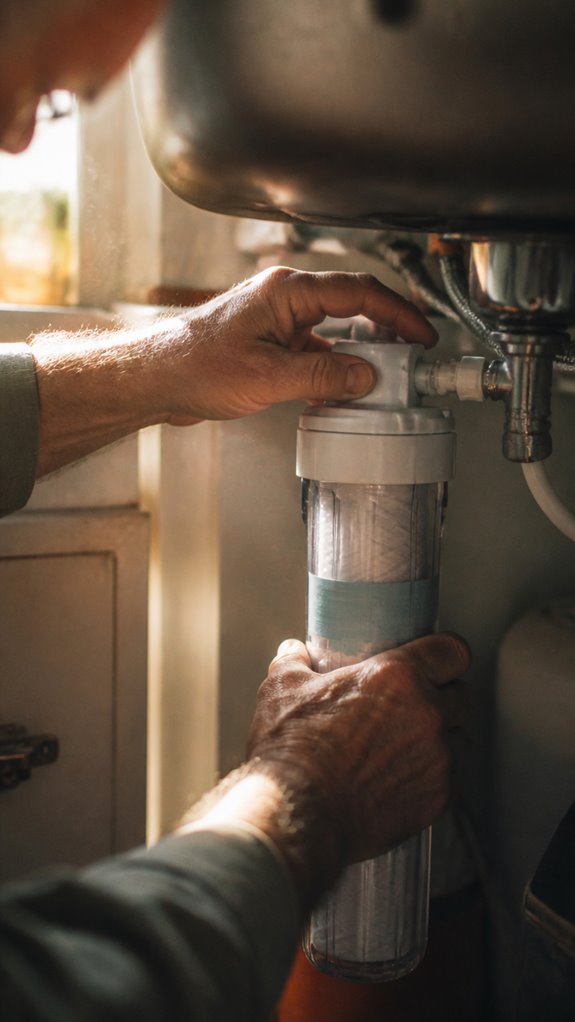
Your dad’s been drinking whatever comes out of the tap for decades, and you know what? That ends now. Reverse osmosis systems with mineral reintegration aren’t just hydration marketing—they’re your secret weapon against microplastics and heavy metals that accelerate aging. Incorporating colored door tapes can help identify and maintain the filtration system easily, ensuring longevity and proper use. Skip the corporate-speak nonsense you tolerated in those soul-crushing meetings; water quality directly impacts his vitality. You’re not adding complexity; you’re removing threats. Install a system under his sink, and suddenly he’s sipping pure H₂O that actually nourishes instead of degrades. This isn’t reactive medicine—it’s predictive wellness disguised as a simple filter. Using a high-quality system also minimizes the need for frequent replacements, making maintenance more straightforward and less stressful.
Staying Hydrated During Heat, Illness, And Activity
Because your dad’s thermostat is set to “surface of the sun” and he’s still wearing cardigans indoors, you’ve got to accept a hard truth: he’s not drinking enough water, and dehydration during heat waves, illness, or those rare moments he actually moves around the house becomes a silent threat that’ll undo all the biometric sensors and predictive guardrails you’ve installed.
Forget the hydration myths—he doesn’t need to “feel thirsty” first.
Fluid tracking via smart water pitchers with app notifications keeps him ahead of dehydration’s damage.
Heat amplifies risk; illness compounds it. Activity metabolizes reserves fast.
One way to enhance hydration capacity is by using self-cleaning water bottles, which ensure fresh, clean water is always ready without the hassle of manual cleaning. Utilizing smart hydration tools can further automate and motivate consistent drinking habits, ensuring he stays properly hydrated throughout the day.
Real autonomy means he stays hydrated without feeling managed.
Dehydration Goes Undetected Silently
Dehydration’s the silent assassin nobody talks about at the dinner table—your dad can be sitting right there, lucid and chatty, while his cells are literally shrieking for water, and you’d never know it without the right visibility. Here’s the thing: hydration myths keep circulating like bad corporate memo chains. Your dad’s probably heard that thirst’s reliable or that coffee counts. Wrong. Older bodies don’t signal dehydration effectively. Smart water trackers now monitor intake patterns in real-time, cutting through those myths completely. You’re not micromanaging—you’re granting autonomy through clarity. Monitor Light Bars can also help create an environment that encourages better hydration cues by providing optimal lighting during meals and activities.
Elderly Ignore Thirst Cues
Elderly brains dial down thirst signals like your old boss cranking the AC to punish the team—subtle, relentless, and nobody notices till productivity tanks.
You’re modernizing Dad’s pad at 79, ditching corporate drudgery for his autonomy. Thirst perception fades; fluid regulation glitches silently. Why wait for dehydration’s crash?
Reclaim dignity—hack this with smart cues that nudge sips proactively. No nagging, just liberation from ignored signals.
Remember that micromanaging tyrant? Don’t let thirst pull the same stunt. You’ve got the tech edge now. Install ambient reminders; watch significance surge.
Understanding thirst regulation helps us implement effective hydration strategies for seniors.
Modern hydration tools can detect early signs of dehydration, enabling timely intervention before serious health issues develop.
Freedom tastes better hydrated, right?
Dad’s independence? Locked in.
Smart Hydration Monitoring Systems
When you’ve spent years watching middle management ignore warning signs till everything crumbles, you recognize the pattern—and you’re not letting your dad’s hydration slip into that same reactive death spiral.
Smart hydration sensors now track fluid intake in real-time, sending you gentle nudges before dehydration becomes a crisis.
These intelligent hydration systems integrate with your dad’s existing smart home setup, monitoring his water pitcher usage and consumption patterns without nagging.
You’re building autonomy, not surveillance—giving him the dignity to stay independent while you finally sleep knowing his wellness stays protected.
FAQ
Can Smart Water Pitchers Integrate With Existing Smart Home Systems and Voice Assistants?
You’ll find smart water pitchers seamlessly integrate with your existing ecosystem through voice assistant compatibility and smart home integration. They’re designed to work autonomously—you’re not tethered to proprietary systems, freeing you from vendor lock-in.
What’s the Cost Difference Between Basic Hydration Reminders and Advanced Biometric-Linked Systems?
You’re looking at $40–80 for basic reminders versus $300–600 for biometric-linked systems. That premium buys you hydration accuracy tied to your real-time health data and seamless system compatibility, freeing you from guesswork and reclaiming autonomy over your wellness.
How Do Water Tracking Devices Account for Fluid Intake From Foods and Beverages?
You’ll integrate food moisture content databases and beverage logging into your system’s algorithms, combining sensor data with nutritional databases to calculate total fluid intake for true hydration accuracy and nutrient absorption tracking.
Are There Privacy Concerns With Hydration Monitoring Systems Collecting Daily Consumption Data?
Your hydration data’s a digital fingerprint—yes, privacy concerns exist. You’ll want explicit user consent agreements and encrypted storage. Don’t let corporations monetize your wellness metrics without your full liberation and control over what’s collected.
What Happens to Hydration Data if the Smart Home System Experiences Technical Failure?
You’ll lose real-time hydration tracking when your system fails, but you’re not dependent on it—manual logging reclaims your autonomy. Most platforms don’t guarantee data accuracy or system reliability during outages, so you retain full control over your health independence.
Summary
You’re not just installing smart pitchers; you’re building invisible guardrails around his independence. Think of these tools as the antidote to those soul-crushing office meetings where you couldn’t even grab water without interruption. Now your dad stays ahead of dehydration’s silent creep, maintaining the mental clarity and physical vigor that keep him *him*. That’s dignity automated.