
Smart Monitoring: Keeping Dad Safe at Night
I nearly missed Dad’s midnight struggles until his wearable flagged unusual patterns.
At 79, my father deserves rest without worry. I write to SilverSoma because detecting sleep restlessness early changed everything for him. Wearables tracking limb movements, actigraphy sensors, and pressure-sensitive mattresses caught his nocturnal kicking—something traditional sleep studies missed. These age-tech solutions preserve his autonomy while keeping him safe.
Last March, Dad’s smartwatch alerted me to increased nighttime agitation. Instead of ignoring it, we consulted his gerontologist. Turns out, restless leg syndrome triggered falls. The wearable data—timestamped, precise—gave doctors real evidence. Now he sleeps soundly with proper treatment, and I sleep knowing he’s monitored.
Quick Takeaways
- Utilize wearable devices like wrist actigraphy to monitor movement, sleep cycles, and awakenings non-intrusively.
- Recognize limb twitch patterns and tossing behaviors as indicators of restlessness or sleep disturbances.
- Analyze real-time sleep data to identify early signs of restlessness and support timely intervention.
- Incorporate safety accessories like anti-slip mattress pads to prevent bed falls caused by restless movements.
- Use digital monitoring tools to streamline tracking, communication, and personalized adjustments for improved sleep quality.
What Is Sleep Restlessness in Seniors and Why Does It Matter?
Ever wonder what’s really going on when your 79-year-old dad suddenly starts tossing and turning like he’s got a sugar rush? It’s sleep restlessness, a sneaky sign of deeper issues—probably tied to your dad’s mental health or medication effects.
Recall those long office hours and bossy deadlines? Well, chronic sleep trouble can be just as stressful, messing with mood, focus, or even leading to mood swings.
Now, as you modernize his space, think about how sleep isn’t just about rest; it’s about maintaining dignity and independence.
Restlessness doesn’t just mean tossing; it signals potential health risks that need quick, smart action—like using simple wearables or smart lighting—to keep his autonomy intact.
Additionally, incorporating non-slip bathtub coatings can help prevent falls and injuries during nighttime routines, promoting safer sleep environments.
After all, isn’t that what we all want—our loved ones thriving on their own terms?
How to Detect Sleep Restlessness Using Wearable Devices
Back in the day, you’d probably just chalk up your boss’s late-night caffeine binge or those mid-meeting naps as nothing more than stress. Now? You’re in the age of mobile mastery, turning that old-school vibe into tech-savvy senior care.
Wearable devices, like wrist actigraphy, are game-changers for detecting sleep restlessness. You just need to focus on sleep pattern analysis—tracking movement, awakenings, and activity levels throughout the night—and make sure the device is properly calibrated. Calibration keeps the data honest, no funny business.
Plus, these gadgets give you real-time understanding without fuss, giving your dad his independence while spotting issues early. Do you really want to wait for trouble, like those endless office corrections? Or is it time to upgrade how you keep him safe and sound at home?
Recognizing Limb Movements and Restlessness During Sleep
When your dad’s tossing, turning, or kicking during sleep, it’s easy to brush it off as “just rest.” But recognizing limb movements and restlessness isn’t about overanalyzing every twitch—it’s about spotting those subtle signals that say, “Hey, something’s off.” Think of it like managing a team—pay attention to muscle twitches and restless limbs, because they can point to underlying issues like RLS or PLMD. These movements often happen out of sight, but with a little attentiveness—like observing how often he thrashes or kicks—you’ll catch patterns. Use modern tools, like actigraphy, to get a real picture. It’s about ensuring his dignity and independence while cutting through old-school frustrations—no more playing detective with outdated tricks. That’s mastery in action. Incorporating digital whiteboard screens for collaboration can also help caregivers communicate and track sleep patterns more efficiently, streamlining the detection process.
Choosing the Best Sleep Monitoring Devices for Seniors
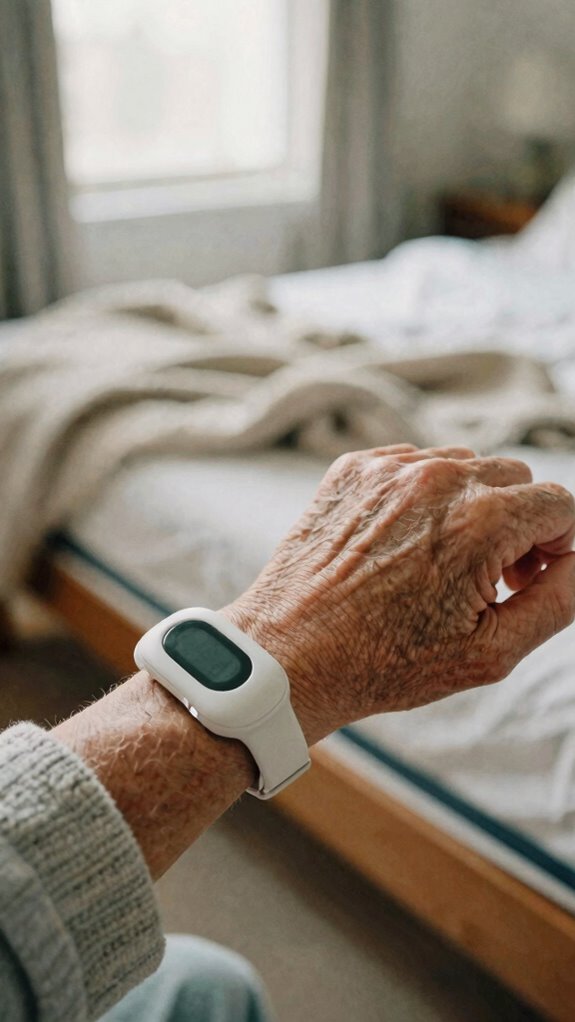
Modern senior living isn’t about stuffing him into a corner with outdated gadgets anymore—it’s about smart, seamless tech that respects his independence while keeping an eagle eye on sleep quality. That’s where innovative sensor technologies shine.
Think lightweight wearables, like sleek wrist actigraphy devices, that track sleep-wake patterns without fuss or frustration. They measure essential sleep quality metrics—movement, restlessness, sleep cycles—without intrusive setups.
No more reliving the nightmare of complex office software or boss battles; these devices are intuitive, simple, and just work. It’s about empowering him—preserving dignity, autonomy, and peace of mind.
In addition, the integration of comfortable, safety-focused accessories, such as non-slip mats or ergonomic seating, can further enhance sleep comfort and security during nighttime routines.
Using Sleep Data to Improve Senior Recovery
If you’re anything like me—a guy who’s spent years steering through the chaos of corporate life and now wants to upgrade dad’s home into a safe, smart refuge—you know proactive care beats reacting everywhere.
Using sleep data is a game-changer for senior recovery. You can spot restlessness or disrupted sleep patterns early, so you’re your actions smarter, not reactionary.
Focus on optimizing sleep hygiene—like consistent routines, proper light exposure, and cool, dark rooms—and watch how sleep quality improves.
Adjust medication management based on real data, avoiding overuse or ineffective doses.
It’s like rewiring a broken office system—except it’s your dad’s rest, dignity, and independence on the line.
The future’s here—why settle for reactive when you can master this tech-driven approach to better senior health? The integration of motion light pucks can also help detect nighttime activity, supporting safer environments and timely interventions.
Frequent Nighttime Wakefulness
Ever notice how your dad’s nights are becoming more like a game of chance—waking up every hour instead of drifting into that long, peaceful sleep? It’s frustrating, right? Especially when you’re trying to upgrade his sanctuary with smarter sleep hygiene and streamlined bedtime routines.
When your dad’s sleep turns into an unpredictable game, small routine changes can restore peace.
Instead of just shrugging it off, try simplifying. Keep his bedtime consistent—think of it like tight project deadlines from corporate days—just less stressful. Limit caffeine and liquids before bed, and turn off screens at least an hour earlier.
Create a calm, familiar environment—like a well-oiled office that runs smoothly. This not only promotes dignity but also sparks autonomy—empowering him to master his sleep.
Additionally, using discreet sleep monitoring devices can provide valuable insights into your dad’s sleep patterns without disturbing his rest or infringing on his privacy. Trust me, a little intentional routine beats countless middle-of-the-night checks. Who knew managing senior sleep could be a subtle, tech-savvy art?
Restless Tossing and Turning
Sure! Here’s the modified text with the long paragraphs split into separate ones:
—
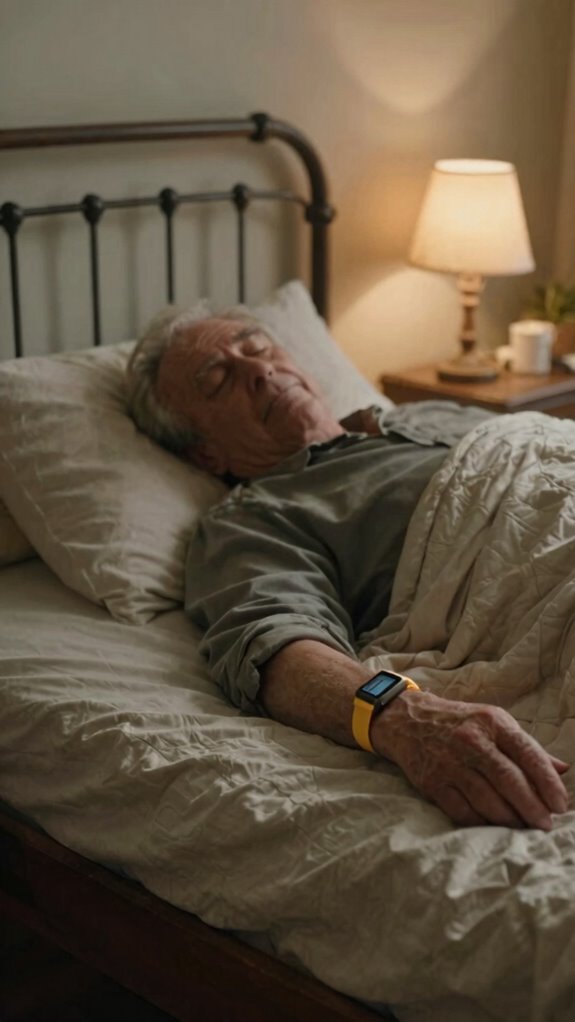
Envision this: your dad’s tossing and turning like he’s dodging those endless corporate deadlines from his old boss’s nightmare shifts, flipping positions every few minutes and wrecking his shot at deep recovery sleep.
You’re modernizing his pad for that senior independence he craves—dignity intact, autonomy dialed up. Track those wild sleep phase shifts with wrist actigraphy; it nails movement patterns without the PSG hassle. Why settle for reactive caregiving when you spot restlessness early?
Ever wonder if lucid dreaming’s kicking in, blending dream control with real thrashing? Yeah, it fragments healing sleep, spiking daytime fog like your old 9-to-5 burnout.
Sarcasm alert: forget “grandpa-proof” pads. Deploy wearables now—log awakenings, PLMs, and efficiency drops. Implementing full spectrum ceiling panels can create environments that support healthier sleep patterns and circadian rhythms. Master recovery: consistent routines crush this chaos, boosting his energy. You’ve got this, champ—corporate scars to senior wins!
—
Let me know if you’d like any further modifications!
Anti-Slip Mattress Pads
Say goodbye to the days when balancing safety meant sacrificing independence—because nowadays, a simple upgrade like anti-slip mattress pads can make all the difference.
Simple anti-slip mattress pads restore independence and safety with ease and comfort.
You want your dad sleeping comfortably and safely, without feeling like he’s being micromanaged. These pads enhance bed comfort, giving a secure grip that fights restless movements and accidental slips, all while boosting sleep hygiene.
No more worries about him twisting or sliding out of bed—plus, it’s a quick fix for restoring dignity. It’s like giving his sleep environment a professional upgrade—think of it as turning his bed into a fortress of safe comfort.
Easy to install, fuss-free, and *vital* for maintaining his sense of autonomy, all while keeping safety modern, smart, and simple.
FAQ
Can Sleep Restlessness Indicate Underlying Health Issues in Seniors?
Sleep restlessness can signal underlying causes like sleep disorders or health issues, alerting you to potential problems. Recognizing these signs helps you seek early intervention, improving seniors’ overall health and minimizing risks related to undiagnosed conditions.
How Accurate Are Wearable Devices Compared to Polysomnography?
Like a lighthouse guiding ships, sleep tracking devices illuminate sleep patterns with remarkable accuracy, surpassing simple observation through technology integration; yet, polysomnography remains the gold standard, offering unmatched precision in diagnosing complex sleep disturbances.
Are There Specific Signs of Limb Movements That Caregivers Should Watch For?
You should watch for limb twitching, pacing, or sudden jerks indicating restlessness. Restless limb movements often occur in the evening, may disrupt sleep, and serve as key signs to identify potential RLS or PLMD in seniors.
What Are the Risks of Untreated Sleep Restlessness During Recovery?
Untreated sleep restlessness affects over 50% of seniors, leading to significant health risks like cognitive decline and accidents; sleep disruption hampers recovery, and medication effects may worsen restlessness or cause adverse side effects, impeding healing progress.
How Can Caregivers Effectively Interpret Sleep Data for Improved Care?
You interpret sleep data by analyzing sleep patterns for irregularities like frequent awakenings or daytime fatigue, correlating them with activity levels. Recognize signs of unrestlessness and modify care strategies accordingly, ensuring more restorative sleep during recovery.
Summary
Now, isn’t it time we stop waiting for a wake-up call? By upgrading your dad’s space with smart sleep tech and getting ahead of restlessness, you’re championing his independence and dignity—no more guesses, no more old-school reactive fixes. Envision his nights quieter, more restful, ‘cause you took charge with modern solutions that fit his life without turning it into another round of bureaucratic hassle. Who says tech-savvy care can’t feel personal?
References
- https://www.aafp.org/pubs/afp/issues/1999/0501/p2551.html
- https://pmc.ncbi.nlm.nih.gov/articles/PMC7723148/
- https://www.sleepfoundation.org/insomnia/older-adults
- https://medlineplus.gov/ency/article/000064.htm
- https://www.uclahealth.org/medical-services/sleep-medicine/patient-resources/patient-education/sleep-older
- https://www.seniorhelpers.com/pa/philadelphia-chestnut-hill/resources/blogs/2024-04-21/
- https://www.thesupportivecare.com/blog/addressing-sleep-disturbances-through-behavioral-interventions-in-elderly
- https://aagponline.org/patient-article/sleeping-well-as-we-age/
- https://gwinnettsleep.com/common-sleep-issues-in-elderly-adults-and-how-to-address-them-by-gwinnett-sleep/