
Dad’s Winter Confidence: My Mission to Keep Him Steady
I nearly lost my father, Robert, last January on his icy driveway. That moment changed everything for me.
I’m transforming Dad’s environment with intentional aging-in-place upgrades. Slip-resistant footwear, cryogenic ice cleats, strategically placed grab bars—I’m documenting this journey on SilverSoma because senior fall prevention deserves real solutions, not platitudes. Anti-slip matting, motion-sensor lighting, and cane ice-tips create his personalized safety ecosystem. Independence matters to him. Dignity matters more.
Last February, Dad took three confident steps across his freshly salted porch wearing his new Nordic-grip boots. His smile said everything. We’re building resilience through environmental design, not restrictions.
Quick Takeaways
- Wear slip-resistant, waterproof footwear with deep treads and traction aids like ice cleats for better stability.
- Install handrails, anti-slip mats, and stair grips in key home areas to prevent falls on icy surfaces.
- Use assistive devices such as canes with ice tips and maintain proper walking posture for safer mobility.
- Apply ice-resistant paint and install snow melting cables on pathways to reduce ice accumulation.
- Ensure adequate lighting and organize safety equipment for quick access during winter conditions.
Risks of Ice and Snow That Cause Falls in Seniors
Recall those endless meetings where your boss insisted on sticking to processes that seemed more about protocol than real results? That’s exactly how I view some old-school advice on ice safety—back in the day, it was just about warning signs, not mastery over hazards.
Old safety tips focused on warnings, not empowering us to master winter hazards confidently.
As a proud son modernizing Dad’s home, I know ice hazard awareness is far more than avoiding slips; it’s about empowering his independence.
The risks of snow and ice aren’t just icy patches—they’re sneaky, fragile bones waiting for a tumble. That’s why I focus on seasonal footwear maintenance—non-slip soles, traction grips, and keeping shoes in tip-top shape. Proper gear, like rolling craft carts, can also help in organizing winter accessories and safety equipment to ensure quick access when needed.
It’s also important to understand ice slip prevention strategies, which involve both proper footwear and awareness of hidden dangers, so Dad can confidently navigate winter’s tricky terrain, preserving his dignity while staying safe.
How to Walk Safely on Ice
Walking on ice isn’t about hoping your dad’s feet just find their balance — it’s about teaching him a smart, deliberate rhythm that keeps him upright and confident. Think of it like steering a well-oiled corporate team.
First, focus on proper footwear: slip-resistant boots with deep treads and waterproof material are key.
Second, maintain a walking posture: keep shoulders back, chest open, and bend knees slightly—think of standing tall but agile, like a CEO ready to pivot.
To reduce slipping hazards further, choosing recommended non slip stair treads can significantly enhance safety on stairs and other steps.
Finally, master these steps:
- Take short, shuffling steps; don’t lumber or rush.
- Place each foot flat, testing surfaces as you go.
- Keep your hands free or use assistive devices, like a cane with an ice tip.
It’s all about precision—like a well-planned strategy, but for his safety. To further improve footing, consider applying high contrast stair tape on steps for added visibility and safety.
Choosing the Right Footwear for Ice Safety
Ever wonder if your dad’s old sneakers are secretly plotting against him every winter? That vintage pair might look nostalgic, but they’re hardly the hero on icy days. Modern footwear is game-changing—think waterproof materials, deep-tread non-slip soles, and a snug fit that hugs every step. Ensuring your dad wears clear stair grip strips can further reinforce safety by providing extra traction on stairs. Footwear durability isn’t just about lasting through seasons; it’s about ensuring safety when every step counts. Additionally, selecting the right shoes for icy conditions can make a significant difference in preventing slips and falls. Shoe fitting comfort is equally essential—no pinching, no loose vibes—so your dad stays steady and confident. Swap out those office shoes—past your prime, and maybe a little too timid anyway—for the real MVPs: boots with traction grips or ice cleats that attack ice head-on. It’s about preserving dignity, independence, and a bit of that “I’ve got this” swagger.
Home and Pathway Modifications to Prevent Icy Falls
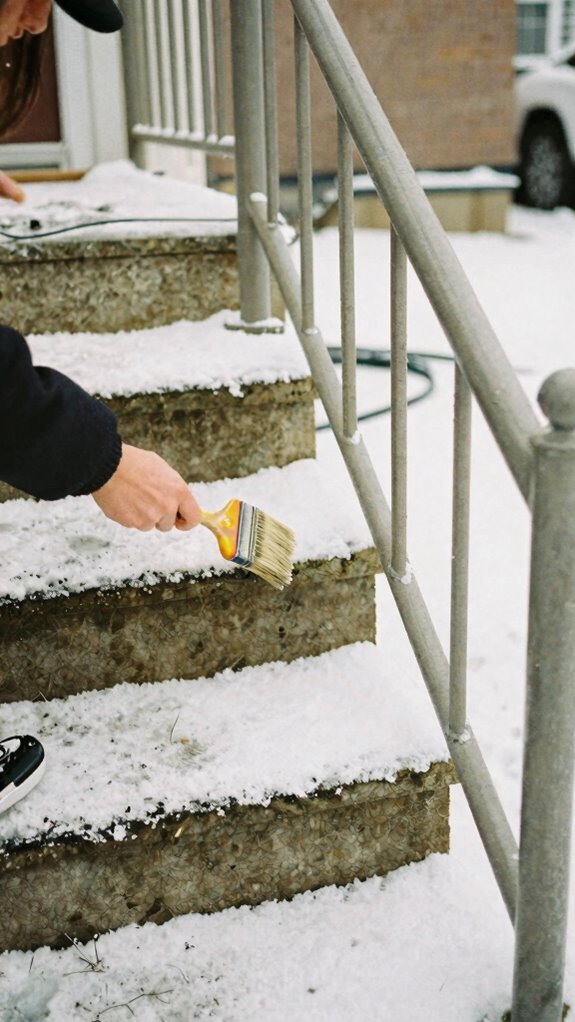
When winter throws its icy curveballs, it’s easy to feel like you’re caught in a never-ending game of “big boss”—and guess what? That boss is your driveway and porch. That’s why I’ve modernized Dad’s walkway with a few game-changing tricks.
First, I used ice-resistant paint on stairs and walkways—no slipping no matter the freeze.
Next, I installed snow melting cables beneath key pathways, so snow and ice are heat-dead before they set in.
And finally, I added sturdy handrails on both sides of stairs, making slips less likely and boosting confidence.
These moves aren’t just tech upgrades; they’re about respecting Dad’s independence while eliminating the fall frustration that we both know too well—like fighting old office battles, but this time, for safety.
Using Assistive Devices on Icy Surfaces
Have you ever felt like steering icy surfaces with a cane or wheelchair turns into a game of risk management, where one slip could rewrite the whole day? It’s true—modern assistive devices are game changers, but customizing them matters.
Think ice-tips for canes—these spikes penetrate ice, turning a slip hazard into a sturdy tool. For wheelchairs, seasonal equipment storage means swapping out wheels or adding traction mats before winter hits—that’s proactive safety, not reactive panic.
When you blend smart device customization with cozy, off-season storage, you’re empowering your dad’s independence without sacrificing dignity. Recall those corporate days obsessing over efficiency? Well, it’s the same logic—maximize mobility, minimize risk, keep control. Additionally, assistive device customization can help tailor safety solutions specifically to icy surfaces, increasing stability and confidence.
Why settle for reactive when you can master icy terrain with tech-savvy, tailored solutions?
Wobbly Handrails Jeopardizing Footing
Wobbly handrails make maneuvering familiar stairs feel like walking a tightrope in a circus act—traumatic for you and downright risky when icy weather hits. Handrail stability is critical; loose rails threaten footing and shake confidence. Here’s the deal:
- Secure mounting: Tighten or replace rusty brackets—no shortcuts. Top clear stair grip strips can also be a helpful addition to improve safety.
- Slip-resistant coatings: Apply non-slip paint or grip tape to boost confidence with each step.
- Routine checks: Regularly test handrail firmness—don’t wait for a fall to get proactive. Ensuring that the handrails are properly fixed and stable can significantly prevent accidents, especially on icy or slippery surfaces.
Add Anti-Slip Mats
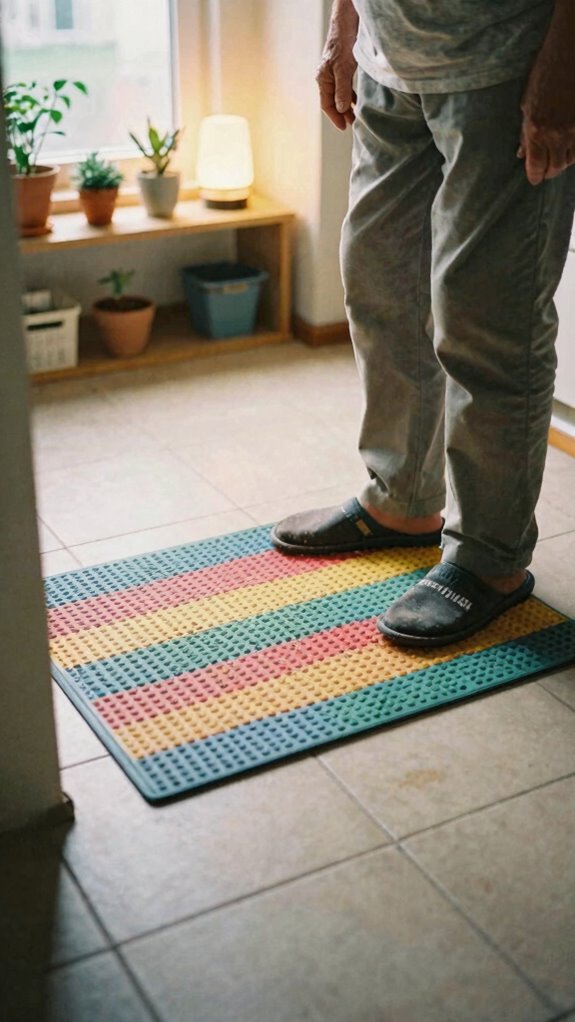
Ever wondered why slipping on slick floors feels like starring in your own wipeout day? That’s where anti-slip mats come in—think of them as your home’s secret weapon. Place them in spots prone to ice or water buildup—entryways, kitchens, bathrooms—to instantly boost traction.
Pair these mats with advanced ice resistant coatings on surfaces and thermal insoles for shoes—today’s tech-savvy upgrades that keep you steady. It’s like upgrading from those old, squeaky wheels at the office to smooth, effortless moves.
No more nervous glances at slippery patches or embarrassing falls that threaten independence. Why settle for reactive than proactive? These mats are simple, low-cost, and effective—helping you reclaim dignity and autonomy.
It’s about mastering safety with finesse—taking control rather than just reacting to hazards. Using daylight hobby lamps can also improve visibility in dim or shadowed areas, further reducing slip risks during activities. Incorporating anti-skid mat grippers provides an extra layer of security on potentially hazardous surfaces.
Installing Grab Bars
Adding heated knee wraps can offer extra comfort and warmth during colder months, helping seniors manage joint stiffness more easily. Top heated knee wraps are designed to provide soothing relief and improve mobility.
- Position grab bars strategically near stairs, entryways, and the bathroom—think about where he struggles most.
- Choose corrosion-resistant materials, perfect for winter weather with snow shovels or ice dam removal.
- Securely install with appropriate anchors—no cheap tricks here—to withstand those icy slips.
It’s all about respecting independence and prepping for winter’s sneaky hazards—because no one wants a panic attack after a fall. Maintaining skin integrity is essential for overall health and safety during these colder months.
FAQ
How Often Should I Replace or Inspect My Anti-Slip Footwear and Devices?
You should replace or inspect your proper footwear and traction devices every season or after heavy use. Regularly check for wear, tears, or loss of effectiveness, ensuring maximum grip and safety on icy surfaces.
What Should I Do if I Feel Unstable While Walking on Ice?
When you feel unstable on ice, immediately steady yourself with traction strategies like widening your stance, using hiking poles or ice tips, and practicing slow, deliberate winter walking. Master these techniques to enhance your balance and confidence outdoors.
Are There Specific Exercises to Enhance Balance on Icy Surfaces?
You should practice ice grip exercises and balance training regularly to master icy surface stability. Focus on reactive balance drills, one-leg stands, and gentle trunk bends, enhancing your control and confidence on slippery terrains.
How Can I Prevent Slipping When Entering or Leaving the House?
Visualize yourself confidently stepping across icy thresholds; clear walkways thoroughly, removing snow and ice, and secure sturdy handrails on both sides. These actions create a safe path, ensuring stability with every step as you enter or leave your home.
What Are the Best Ways to Educate Seniors About Icy Walk Safety?
You should educate seniors by highlighting hydrophobic coatings on footwear for better ice grip, emphasizing footwear customization for individual needs, and demonstrating safe walking techniques, all while encouraging proactive measures like ice cleats and proper pathway maintenance for mastery in icy conditions.
Summary
Visualize slipping on slick ice and feeling your independence hinge on a few clever tweaks—sound familiar? It’s like upgrading from that old, creaky office chair to sleek new ergonomic gear—you gain confidence, dignity, and a dash of swagger. Dad, with a few modern safety tricks, isn’t just surviving winter, he’s thriving. Because really, who says age should slow us down? It’s about smart moves, not fearing the fall—let’s keep him standing tall and unstoppable.
References
- https://elitehhc.com/blog/how-to-prevent-seniors-from-slipping-on-ice-this-winter/
- https://healthyagingpt.com/blog/ice
- https://www.ncoa.org/article/winterize-to-prevent-falls/
- https://www.westonems.com/content/pdf/Snow-and-Ice-Fall-Prevention-for-Seniors.pdf
- https://www.northwestfamilyclinics.com/blog/preventing-winter-falls-on-ice
- https://www.ymcanorth.org/blog/2025/10/16/5371235/staying_steady_ice_safety_tips_for_winter_walking
- https://www.hebrewseniorlife.org/blog/winter-safety-older-adults-preventing-slips-and-falls
- https://www.westboylston-ma.gov/sites/g/files/vyhlif1421/f/pages/fall_prevention_and_safe_shoveling_winter_safety.pdf