
Smart Grip Solutions That Keep Dad Independent
My 79-year-old dad deserves better than dusty therapy balls gathering cobwebs. I’m writing this for SilverSoma because modern seniors like him deserve stylish, dignified tools—not condescending gadgets. Ergonomic grip trainers. Digital resistance devices syncing with wellness apps. Sensor-equipped hand exercisers. These aren’t your grandmother’s rubber grips. They’re sleek. Effective. They honor independence while quietly monitoring safety metrics without annoying alarms.
Last Tuesday, Dad finally ditched his decade-old therapy putty for a smart grip device. Within weeks, his arthritis discomfort eased noticeably. He even joked about out-gripping his grandkids. That moment crystallized why adaptive technology matters—it’s not about replacing capability. It’s about dignified progression, maintaining what truly matters: connection and autonomy.
Quick Takeaways
- Ergonomic grips and easy-to-hold utensils reduce strain and improve grip strength for seniors.
- Resistance and grip-strengthening tools like knobbly balls and smart trainers enhance dexterity.
- Adaptive devices such as widened pen handles and soap dispensers support daily hand functions.
- Sensor-based safety systems monitor vital signs and alert caregivers, promoting independence.
- Engaging digital tools, including smart styluses and interactive exercises, boost hand mobility and mental engagement.
Why Hand Mobility Is Key to Seniors’ Independence
Ever wonder what really keeps a senior independent after they’ve hung up their corporate badge? For my 79-year-old dad, it’s about understanding that strong hand durability and smooth joint lubrication are essentials, not luxuries. Think of it like keeping his office equipment running—no more sticky keyboards or squeaky chairs.
We’ve upgraded his workspace with ergonomic grips and anti-slip handles, making everyday tasks feel almost effortless again. It’s all about respecting his autonomy, preventing frustration, and avoiding the old “bossy caregiver” vibe.
Honestly, I want him to feel in control, not like a patient on autopilot. Sustainable hand health isn’t just a small fix—it’s the key to his dignity, his ability to keep doing what he loves, and staying sharp in his own little kingdom.
How to Recognize Early Signs of Hand Flexibility Decline
Keeping an eye on your dad’s hand flexibility? You know, those quick hand reflexes he used in the boardroom?
Watch for subtle signs like his fingers stiffening up, or if he struggles to pick up a coffee mug easily.
If fine motor tasks—like buttoning a shirt or twisting a tap—become a challenge, that’s a red flag.
Maybe his grip feels less firm or his hand movements aren’t as precise—that’s early decline waving hello.
Another sign might be his difficulty handling everyday objects, which can be related to issues with rolling craft carts or other tools that require steady hands.
This isn’t just about comfort; it’s about preserving his autonomy and dignity.
Think of it as tuning into his invisible circuit board, catching signals before they become a full-blown snag.
The goal? Stay proactive—because delaying means risking unnecessary frustrations and loss of independence.
And let’s face it—who wants that?
Easy Hand Exercises to Boost Strength and Flexibility for Seniors
If you’re tired of the old-school “wait until it’s a problem” approach to your dad’s hand health, then it’s time to get proactive—without turning his home into a high-tech lab. Modern exercises can boost strength without feeling like a chore. Think simple hand massages after cooking or during breaks—these boost circulation and ease tension. Plus, agile finger stretches mimic those fine motor skills he needs for everyday tasks. Here’s a quick rundown:
| Tip | Action |
|---|---|
| Finger curls | Squeeze a soft ball or rubber band repeatedly |
| Hand massages | Relax muscles after cooking or gardening |
| Flexibility stretches | Extend fingers wide, hold, then relax |
Incorporate these into daily routines — just like those old office stretches—so your dad stays independent, with dignity and a grin. Building tool grip strength helps maintain his ability to handle everyday objects with ease. Regularly engaging in these hand exercises can improve overall dexterity and reduce stiffness over time.
Helpful Tools and Assistive Devices for Better Hand Function
Transforming Dad’s home into a hub of modern support doesn’t mean turning it into a high-tech fortress—unless you want to, of course.
Turning Dad’s home into a supportive space doesn’t mean sacrificing comfort or simplicity.
I’ve learned from those endless hours in the corporate grind how critical efficiency is, and now I want Dad’s space to reflect that—dignity, autonomy, all while simplifying hand tasks.
That’s where helpful tools come into play. From ergonomic soap dispensers for hand washing that keep wrist flexibility intact to easy-grip utensils that make eating less of a chore, I’ve got it covered.
These assistive devices boost his independence, making everyday routines smoother. Who needs frustration over stiff hands or fragile wrists? Not us.
Modern tools don’t just support hand function—they create a home where Dad can truly thrive, comfortably and confidently. Widening utensil handles is another simple adjustment that can greatly improve grip and reduce strain, making daily activities easier and safer. Additionally, comfortable ergonomic pen grips can reduce hand fatigue during writing tasks, further supporting his autonomy.
Building a Daily Routine to Maintain Hand Mobility

It’s funny—after managing stress in boardrooms and juggling deadlines, I realize building a daily routine for Dad’s hand mobility is like running a smooth operation. You gotta stay proactive, not reactive, right? I’ve layered in adaptive technology—like smart grip trainers that sync with his tablet, making exercises fun and social. This approach encourages consistent effort and progress. Plus, I sprinkle in routine check-ins that blend social engagement, whether it’s sharing a story or a friendly game on his voice-controlled game console. It’s all about preserving his dignity and independence—no more “patient” gadgets, just smooth, meaningful movement embedded into daily life. Incorporating vagus nerve massagers into his routine has also shown promise in enhancing relaxation and overall well-being, which supports his hand mobility goals. And with smart door locks that integrate seamlessly into his home security system, he can confidently manage access without stress or complication. Now, his hands stay active, and his spirit stays sharp. No boss would call that a bad move.
When and Why to Consult a Professional About Hand Challenges
There’s no shame in realizing that even the savviest corporate strategist needs a little backup with Dad’s hand health—especially when you’ve been dodging spreadsheets, not nerve diagnostics. If your dad’s hand is made awkward by dominant hand issues, or if genetic predisposition seems to be winning the genetics game, a professional’s eye is essential. Sometimes, the tiniest nerve signal glitch or muscle weakness calls for expert understanding—beyond simple tools or home remedies. Think of it like needing a seasoned CFO when spreadsheets get wonky; you wouldn’t DIY your way through complex financials, right? Whether it’s hand dominance complicating fine motor skills or a family-specific nerve issue, consulting a pro can help preserve dignity, independence, and ease frustration. Investing in top inflatable back supports can also provide excellent relief while seeking professional guidance.
Invest in trusted support before small issues turn into big roadblocks.
Incorporating Hand Care Into Your Overall Senior Wellness Plan
Even in an era where smart homes pretty much run the show, it’s easy to forget that hands still hold the secret to independence — and not just for dad’s favorite coffee mug.
To truly incorporate hand care into your dad’s overall wellness, you have to embrace elderly hand psychology and senior handwriting techniques that keep his mind engaged and his fingers strong.
- Share simple hand exercises that mimic those familiar office stretches (remember those?).
- Use easy-to-grip tools that boost dexterity without feeling like “therapy.”
- Incorporate regular, playful handwriting routines with fun prompts—who said journaling was just a pen and paper?
- Set up a personalized, ergonomic workspace that respects his past professional self.
- Integrate tech like smart styluses that connect to his favorite digital platforms.
Because, really, who doesn’t want their loved one to feel dignified and autonomous, even in a tech-saturated world?
My Grip Weakens Over Time
Recall those days in the office when your dad had a firm grip, turning the paperstuff with confidence, sealing deals before breakfast? Well, that grip’s not quite the same anymore, right? As grip weakens, finger coordination and hand hygiene become our top priorities to keep him moving and feeling independent. So, I’ve been installing easy-to-use tools that help—like ergonomic grips that don’t slip and facilitate better finger control. Here’s a quick peek:
| Tool | Purpose | How it helps |
|---|---|---|
| Silicone Grip Wraps | Improve grip security | Reinforces strength and control |
| Finger Exercisers | Boost finger coordination | Keeps movements sharp |
| Hand Hygiene Kits | Prevent infection and spread | Promotes safety and dignity |
This isn’t just about convenience; it’s about dignity—preserving his independence without turning back the clock. Improving hand strength can also support overall dexterity and quality of life.
Grip-Strengthening Ergonomic Aids
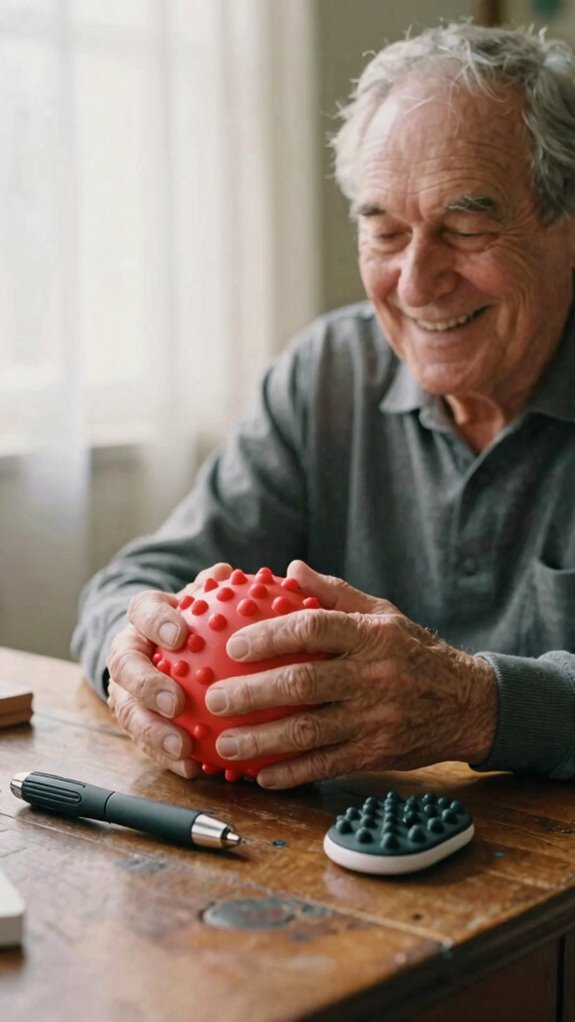
Switching from the sterile grip of old-school rubber grips to modern, ergonomic aids isn’t just about making things easier—it’s about reclaiming your dad’s independence with style and smarts. These new tools boost hand therapy and grip endurance, turning daily tasks into moments of pride rather than frustration.
Adding ergonomic pen grips designed for comfort can further enhance writing ease and reduce strain.
Try these:
- Ergonomic grip tools with adjustable resistance for personalizing hand strength challenges
- Knobbly grip balls that mimic real-world objects to build endurance and dexterity
- Vibration therapy pads to stimulate those tiny hand muscles while relaxing
- Customizable finger stretchers for improved flexibility and control
- Smart grip trainers that track progress via app, so dad can see his gains
Why settle for old, worn-out solutions?
Modern aids empower dignity, support autonomy, and turn aging into a new adventure.
Sensor-integrated Home Design
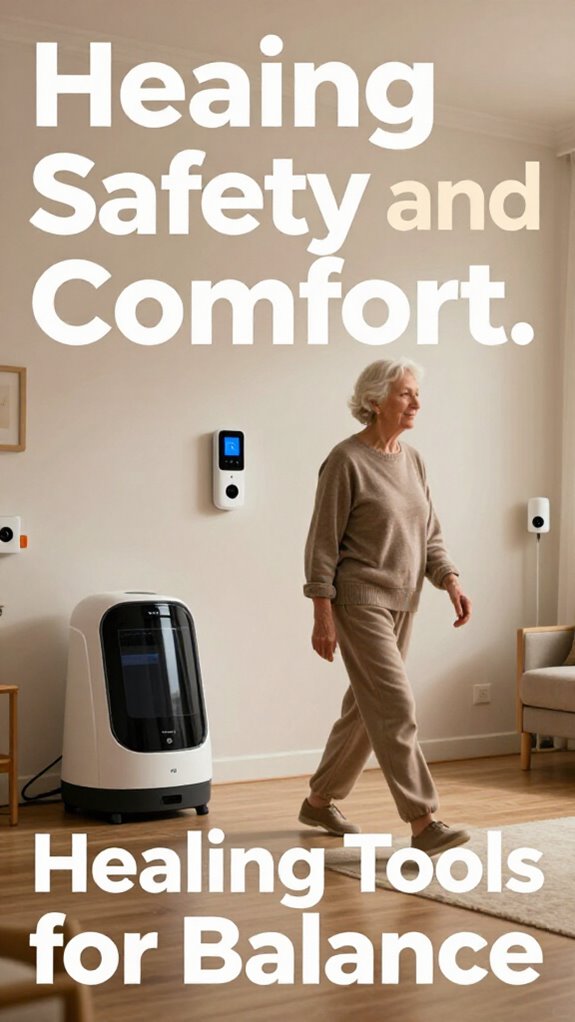
Ever wonder if you’ve been living in the Stone Age when it comes to home safety? Well, I’ve got good news—modern homes for seniors are now all about smart sensor integration and ambient support.
Think wall-mounted radar health sensors that quietly monitor your dad’s essential signs—no awkward wearables, just invisible UI blending into the walls. It’s like having a personal, silent health team without losing his dignity.
These sensors catch tiny movements that might signal trouble and alert the right people instantly. It’s about protecting independence without micromanaging every step.
To ensure the house remains functional even during internet outages, some systems are designed with offline fail safes that operate independently of the network, maintaining vital safety functionality.
Past bosses in my corporate world taught me the power of seamless systems—and now I get to bring that same precision and calm to his home. Ditch the old, reactive stuff; this is safety in style.
FAQ
Are There Digital Tools to Monitor Hand Health Remotely?
You can use remote therapy apps with hand tracking technology to continuously monitor your hand health. These tools detect movements, assess dexterity, and provide personalized feedback, helping you stay connected with your care team effortlessly and intimately from home.
How Do Assistive Devices Adapt for Different Hand Conditions?
You find that assistive devices adapt through customizable features like adaptive grip and a perfect fit, ensuring comfort and control. These tailored solutions support your unique hand conditions, making daily tasks easier and preserving your independence with personalized care.
Can Smart Home Tech Support Easier Hand Movement?
Smart home tech acts like a gentle hand, supporting your grip strength through adaptive controls. Hand exercises become more accessible, turning your home into a haven where easing hand movements feels natural, comforting, and empowering.
What Is the Lifespan of Modern Ergonomic Hand Aids?
Your modern ergonomic hand aids last around 2 to 5 years, depending on use and care. You can extend their lifespan by strengthening your grip through consistent hand strength and grip exercises, supporting ongoing independence.
Are There Innovative Materials Improving Assistive Device Comfort?
You’ll find innovative materials like memory foam, silicone, and lightweight composites substantially boost assistive device comfort. These materials conform better, reduce pressure points, and create a more intimate, supportive experience, making everyday tasks gentler and more personalized.